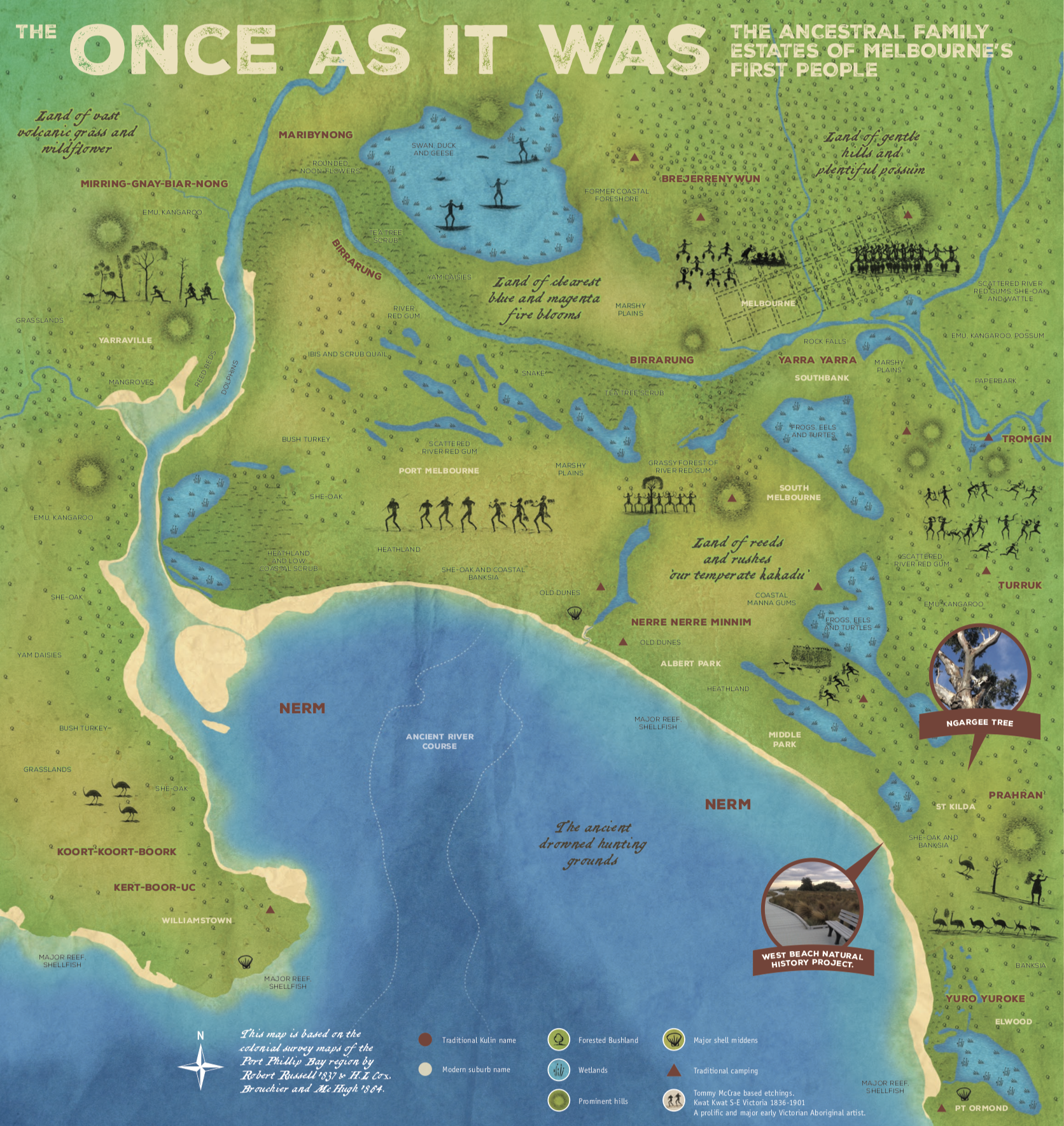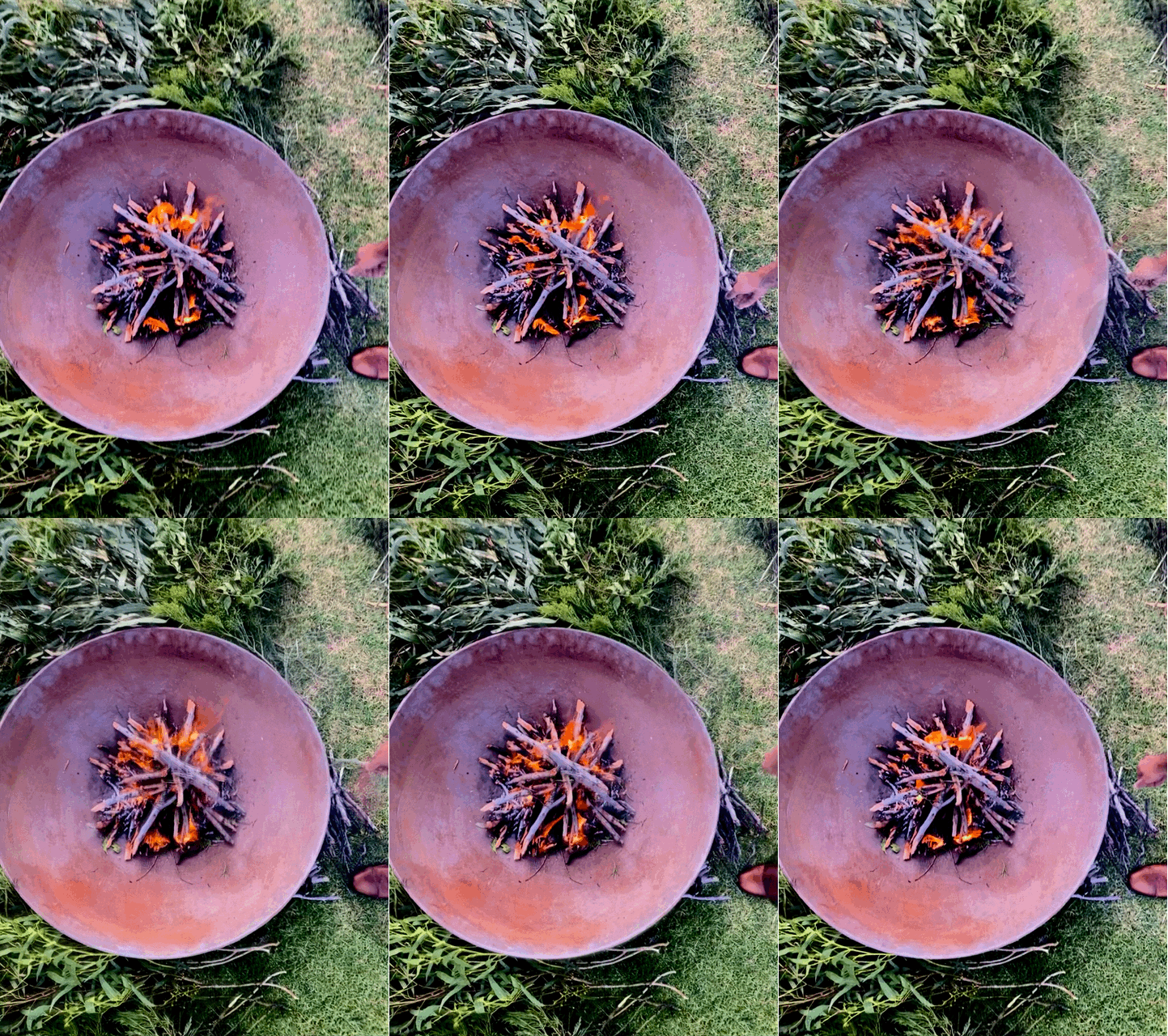
We respectfully acknowledge the Yaluk-ut Weelam clan of the Bunurong Boon Wurrung people who are the traditional custodians and original inhabitants of the land where we live.
We pay respect to the Clan’s Elders past and present, and extend that respect to all First Nations Australians across this land to which we all belong.
West St Kilda is an inner-city suburb of Melbourne, a parcel of prime land, sand and greenery sandwiched between Port Phillip Bay and Albert Park Reserve, garnished by West Beach and Catani Gardens, then topped off with a pickled Fitzroy Street.
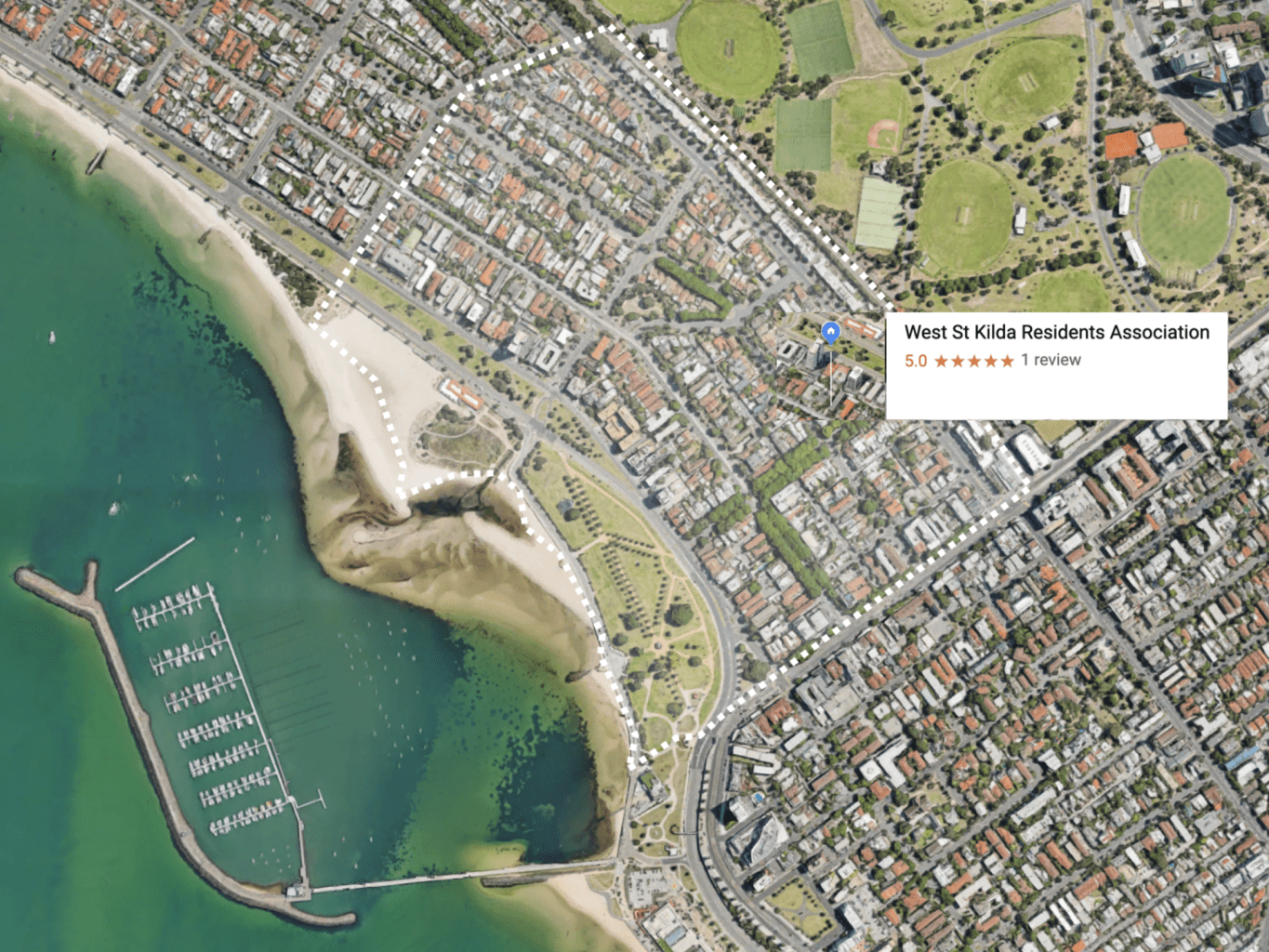
West St Kilda is an inner-city suburb of Melbourne. It is bounded by Beaconsfield Parade, Fraser St, & the No. 96 tram line. Built on reclaimed marshland at the turn of the 19th century, West St Kilda occupies a relatively small part of the City of Port Phillip, wedged between the Albert Park Reserve & Port Phillip Bay at their narrowest convergence.
Mixing the sometimes confronting character of Fitzroy Street & St Kilda to its south-east with the urban gentility of Middle & Albert Parks to its north-west, this densely populated area is dotted with early 20th century flats & post-war apartment blocks, while featuring some of the most exuberant post-Victorian domestic architecture in Australia. With a little imagination, combined with the changing light at different times of the day or year, you may easily sense the atmosphere and drama of a bygone era in several of its streetscapes.

Heritage-listed Catani Gardens covers approximately six hectares of West St Kilda’s foreshore. This greenspace promenade and gathering place also serves as outdoor venue for music & arts festivals, dance parties, and leisure sports competitions during the warmer Melbourne months.
West St Kilda residents worked with local community groups and local and state authorities to restore Heritage-listed Catani Gardens and the shoreline that stretches from St Kilda Pier to Fraser Street — St Kilda’s West Beach and the Yalukit Willam (Yaluk-ut Weelam) Nature Reserve.
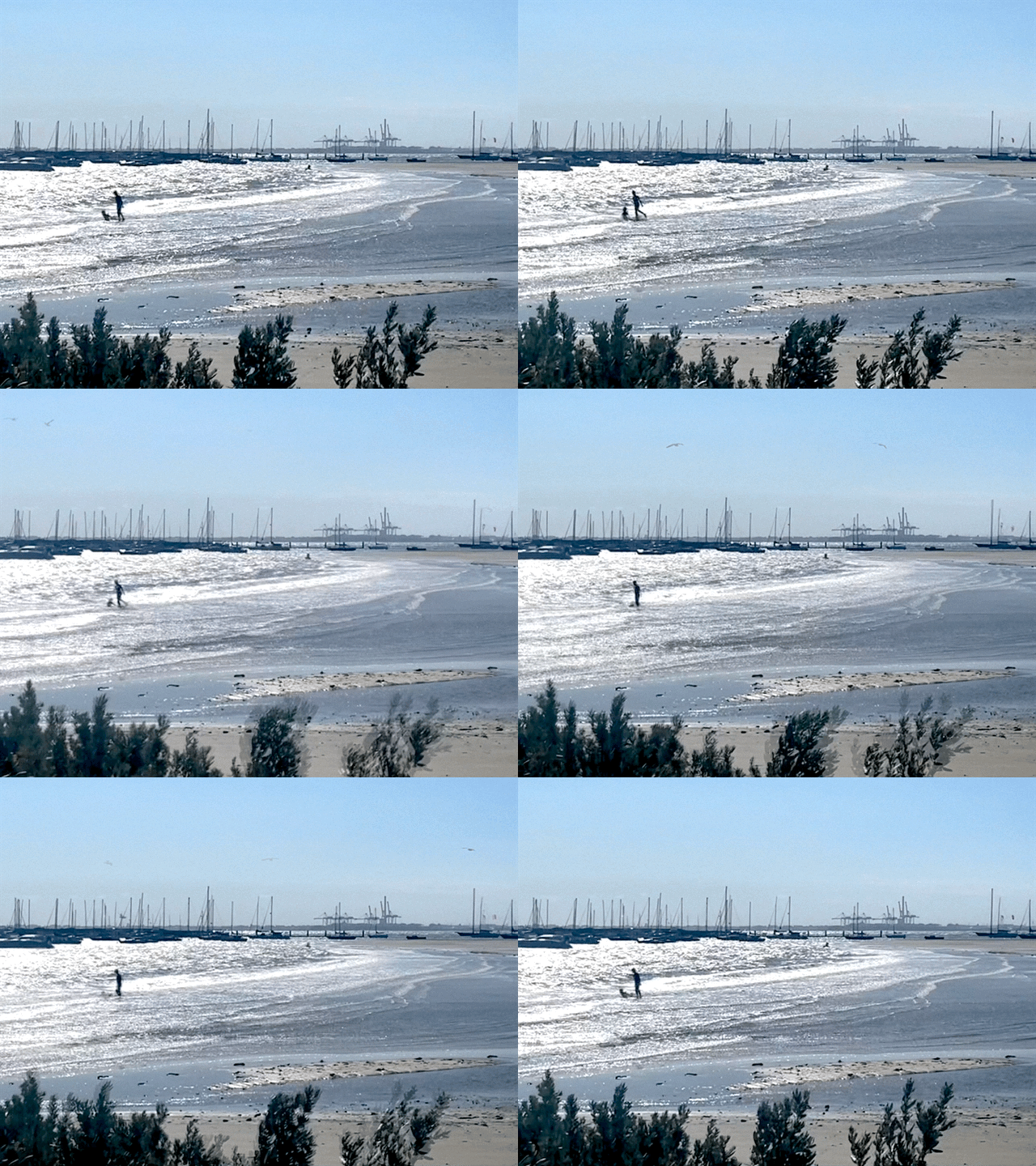
West Beach stretches westward for about a kilometer from St Kilda Pier. Together with the protected Fairy Penguin colony, this inner-city beachside playground for kite-surfing, paddle-boarding and sailing attracts many visitors to Melbourne.

“In 2017 realestate.com.au ranked Australian capital city suburbs by their access to schools, work opportunities, and a number of other factors. The top 10 suburbs were all in Victoria or Queensland. The nation’s “most livable” suburb was St Kilda West (Albert Park came in at number 7 and Port Melbourne at number 9). As Melbourne was rated as the world’s most livable city from 2011 to 2017, we figure that St Kilda West must be the world’s most livable suburb! “ —Colin Fryer, President’s Report 2018 AGM
Who lives in St Kilda West? Find out from the 2021 Census.
West St Kilda is the area bounded by Beaconsfield Parade, Fraser Street, and the No. 96 tram line. It is served by trams 12, 16 and 96, and bus 606.