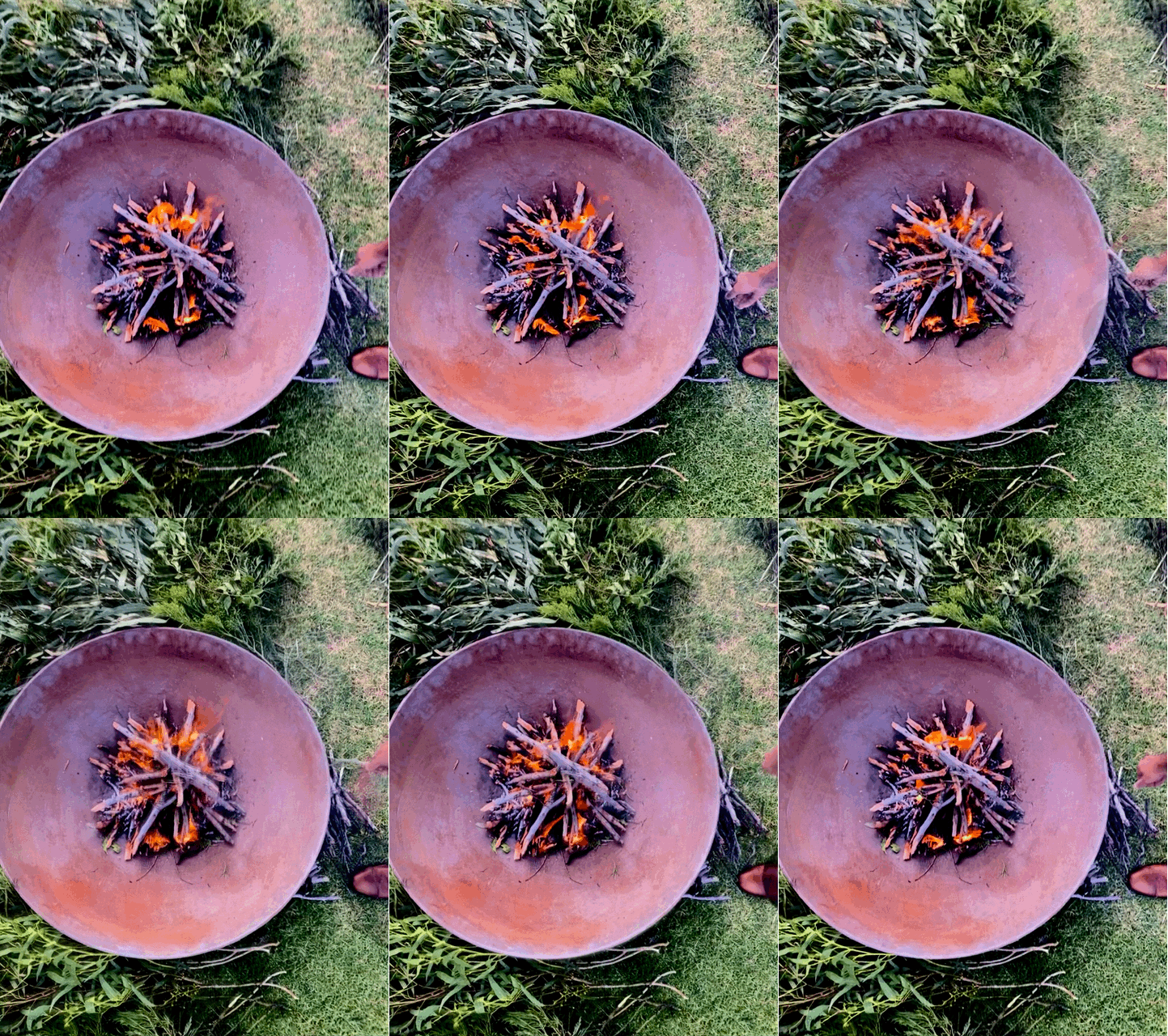
We respectfully acknowledge the Yaluk-ut Weelam clan of the Bunurong Boon Wurrung people who are the traditional custodians and original inhabitants of the land where we live.
We pay respect to the Clan’s Elders past and present, and extend that respect to all First Nations Australians across this land to which we all belong.
West St Kilda is an inner-city suburb of Melbourne, a parcel of prime land, sand and greenery sandwiched between Port Phillip Bay and Albert Park Reserve, garnished by West Beach and Catani Gardens, then topped off with a pickled Fitzroy Street.
WOMINJEKA EURO YUROKE BALLUK
West St Kilda is bounded by Beaconsfield Parade, Fraser Street, and the No. 96 tram line. Built on reclaimed marshland at the turn of the 19th century, West St Kilda occupies a relatively small part of the City of Port Phillip, wedged between Albert Park Reserve & Port Phillip Bay at their narrowest convergence.
Mixing the sometimes confronting character of Fitzroy Street & St Kilda to its south-east with the urban gentility of Middle & Albert Parks to its north-west, this densely populated area is dotted with early 20th century flats & post-war apartment blocks, while featuring some of the most exuberant post-Victorian domestic architecture in Australia. With a little imagination, combined with the changing light at different times of the day or year, you may easily sense the atmosphere and drama of a bygone era in several of its streetscapes.
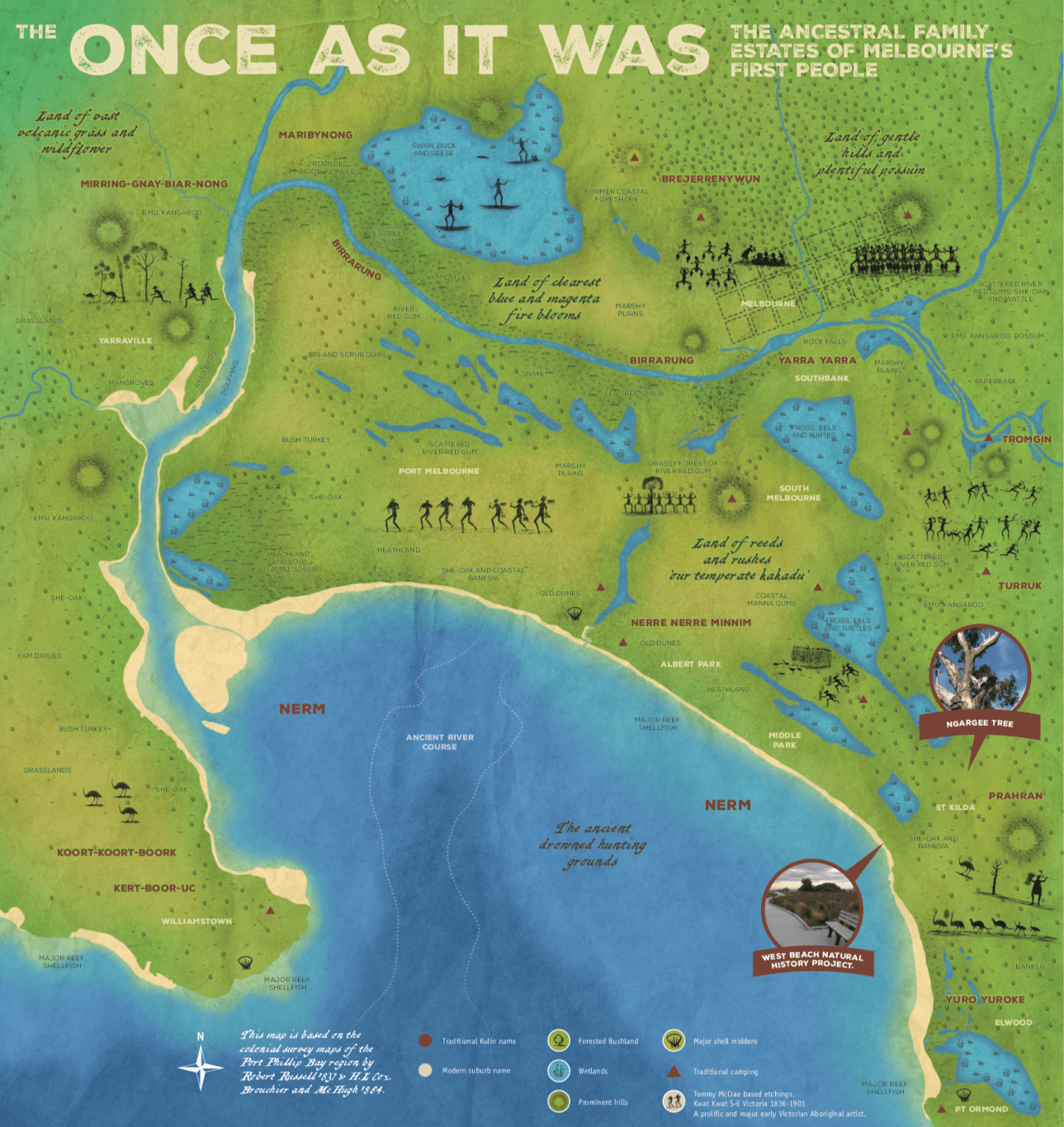
ALWAYS WAS. ALWAYS WILL BE.
Before European settlement in what is now known as St Kilda, Australia’s First Peoples called it Euro Yuroke, from the Boon Wurrung language of the Yaluk-ut Weelam Clan of the Bunurong Boon Wurrung people—the original inhabitants and traditional custodians of this land, its waters and air.

WELCOME TO OUR FORMER SWAMP
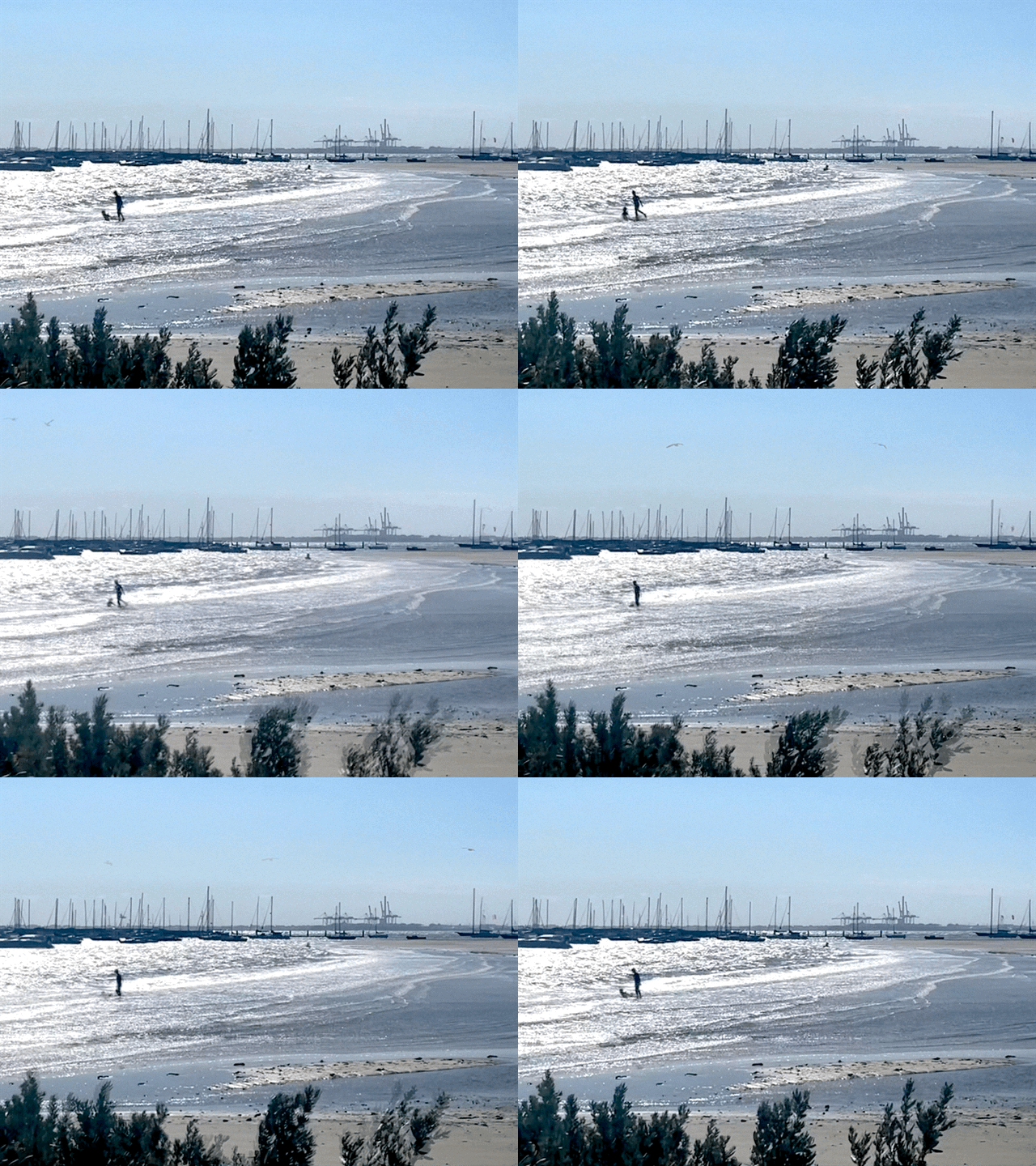
Within our borders: Catani Gardens and St Kilda West Beach. Across the shallow water: the Royal Melbourne Yacht Squadron marina berths. On the other side of the tram tracks: Albert Park Reserve sporting clubs. On the other side of Fitzroy Street: the Victorian Pride Centre, the Prince Of Wales Hotel, the Fifth Province & Freddie Wimpoles, Bistro Volière & Lucien, Banff, Chronicles Bar & Tom’s Liquor, Leo’s, Cone Heads, Di Stasio’s, Topolino’s! Along the foreshore: Donovan ‘s, Stokehouse, Republica, Beachcomber, South Pacific Health Club gym and swimming pool. On the Esplanade and Lower Esplanade: The Espy, Luna Park, the Palais Theatre. Along and around Acland Street: Linden New Art, Theatre Works, The National, Memo Music Hall, Artful Yoga, Cicciolina, The Vineyard, Abbey Road, the St Kilda Community Gardens. On Blessington St: Johnny’s, the St Kilda Botanical Gardens, the Port Phillip EcoCentre.
More about St Kilda Places here
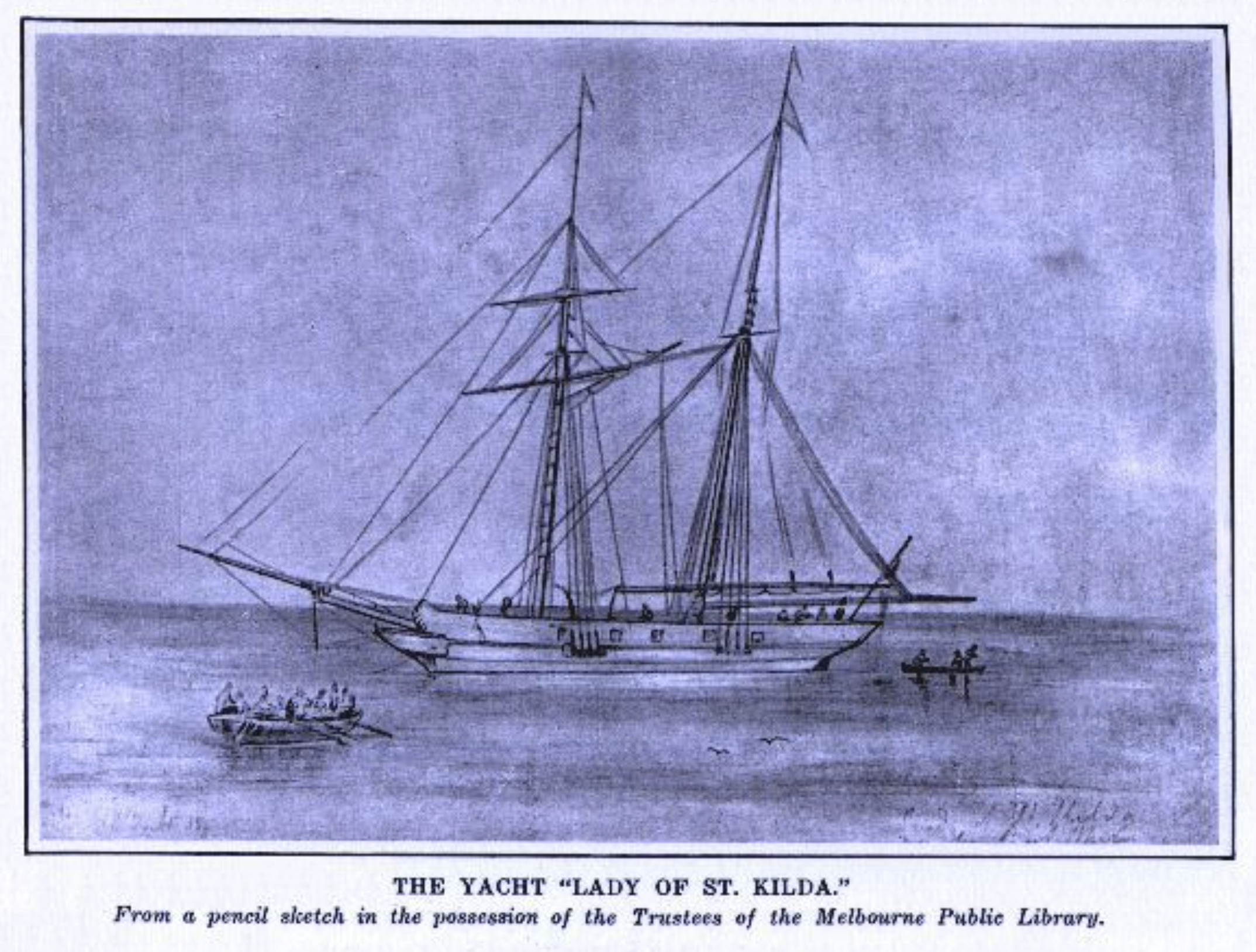
KILDA WAS NO SAINT !
Various theories have been proposed for the word Kilda’s origin, which dates from the late 16th century. No saint is known by the name.
Haswell-Smith (2004) notes that the full name St Kilda first appears on a Dutch map dated 1666, and that it might have been derived from Norse sunt kelda (“sweet wellwater”) or from a mistaken Dutch assumption that the spring Tobar Childa was dedicated to a saint. (Tobar Childa is a tautological placename, consisting of the Gaelic and Norse words for well, i.e., “well well“.) Scottish writer Martin Martin, who visited in 1697, believed that the name “is taken from one Kilder, who lived here; and from him the large well Toubir-Kilda has also its name.”
– Wikipedia on St Kilda
Music & Video by Mal Webb, James Cattell, Dominic Hook, Kylie Morrigan et al
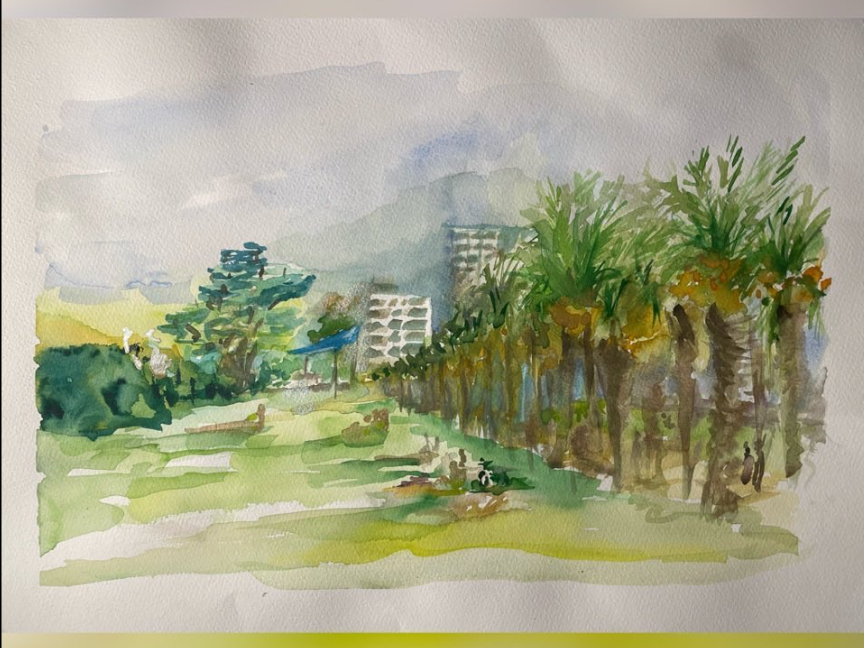
VIVA CATANI !
Throughout Carlo Catani’s positions at the Lands and Public Works Departments as surveyor and draughtsman and his latter engineering roles he was crucial to the development of our late colonial through to early state arterial roadways.
The St Kilda Foreshore Gardens are 15 acres of foreshore reclaimed by Carlo Catani amidst 27 acres of St Kilda shoreline that he designed and landscaped. Catani Gardens are seen to embody Mediterranean influences that Carlo gleaned from his European tour of 1912, which ’til today fixes Catani as one of Victoria’s chief place-makers.
– Victorian Collections on Carlo Catani

Heritage-listed Catani Gardens covers approximately six hectares of West St Kilda’s foreshore. This greenspace promenade and gathering place by the bay also serves as outdoor venue for music & arts festivals, dance parties, and leisure sports competitions held during the warmer Melbourne months, from the Spring Carnival in November to around the Easter holidays in March/April.
OUR TREASURED BAYSIDE SUBURB
West St Kilda residents worked with local community groups and local and state authorities to restore Catani Gardens and West Beach — the foreshore stretching from St Kilda Pier to Fraser Street.
“West Beach in St Kilda West, Victoria, was named the Overall Winner of the Keep Australia Beautiful National ‘Clean Beaches’ Awards in October 2016. Supported by the Port Phillip EcoCentre, the beach was recognised for its cleanliness, sustainable practices, and community engagement.
The award highlighted the effective partnership between the EcoCentre, local residents, businesses, and council in maintaining the beach, as well as the success of the Young Legends program. In addition to the top prize, the site was recognised for excellence in sustainability, litter prevention, and community education.”
“In 2017 realestate.com.au ranked Australian capital city suburbs by their access to schools, work opportunities, and a number of other factors. The top 10 suburbs were all in Victoria or Queensland. The nation’s ‘most livable’ suburb was St Kilda West (Albert Park came in at number 7 and Port Melbourne at number 9). As Melbourne was rated as the world’s most livable city from 2011 to 2017, we figure that St Kilda West must be the world’s most livable suburb! “ —Colin Fryer, President’s Report 2018 AGM

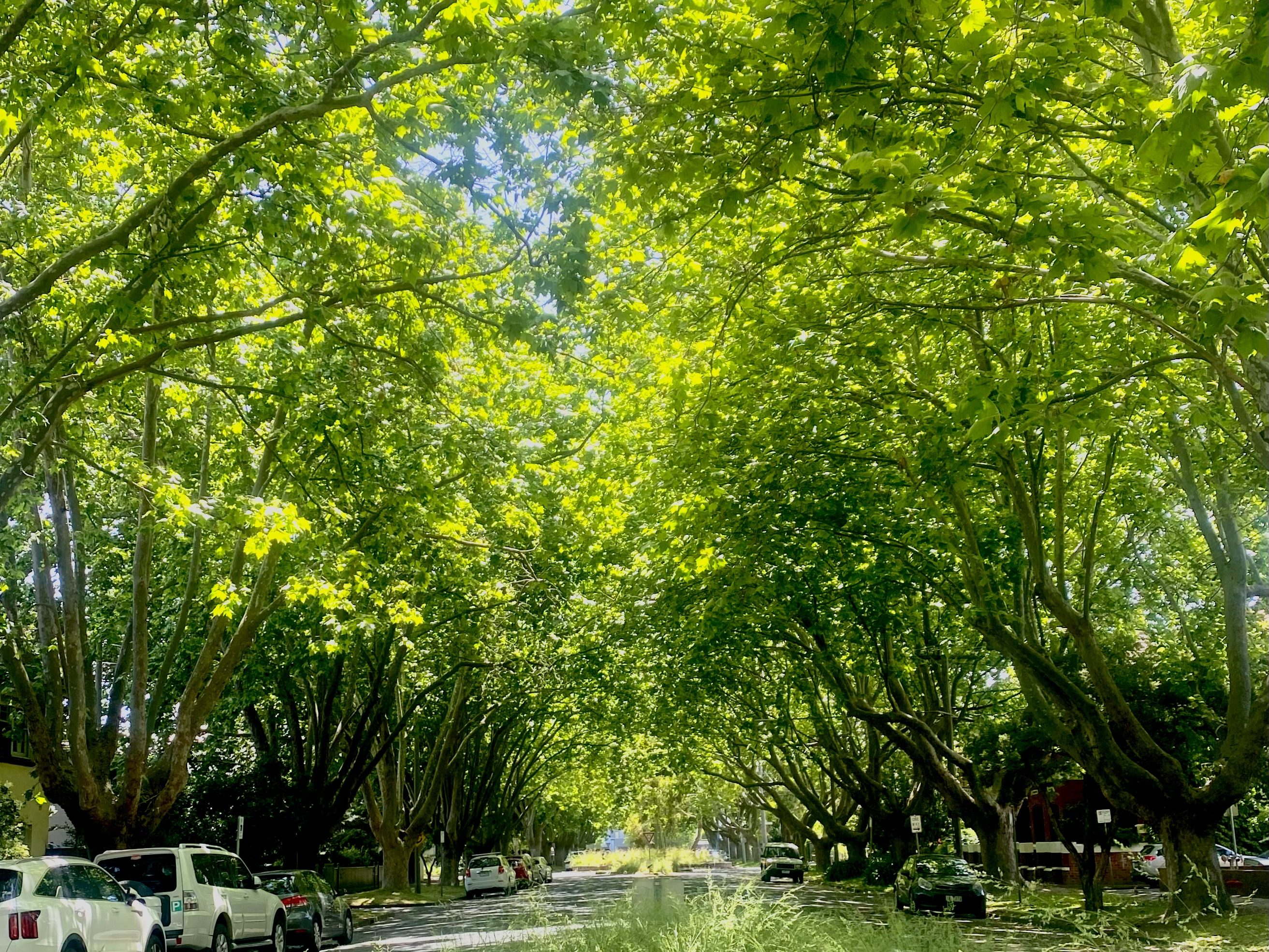
Who lives in St Kilda West? Find out from the 2021 Census