About this page: The content outlines pivotal moments in Australia’s ongoing struggle for Aboriginal rights, spanning from the 1965 Freedom Ride to the recent Voice To Parliament Referendum in October 2023. Key events include the Wave Hill Walk-Off in 1966, the 1967 Referendum acknowledging Aboriginal people, and the landmark Mabo decision in 1992, which rejected terra nullius. The content emphasises the continued fight for recognition and reconciliation, highlighting the Uluru Statement From The Heart and the subsequent referendum, where the proposal for constitutional recognition was rejected. The piece calls for ongoing support for Aboriginal and Torres Strait Islander rights amidst historical injustices. It calls, above all, for this fractured nation to resolve presently its colonial history, so that we may finally come to a shared understanding of what it means to be a proud Australian.
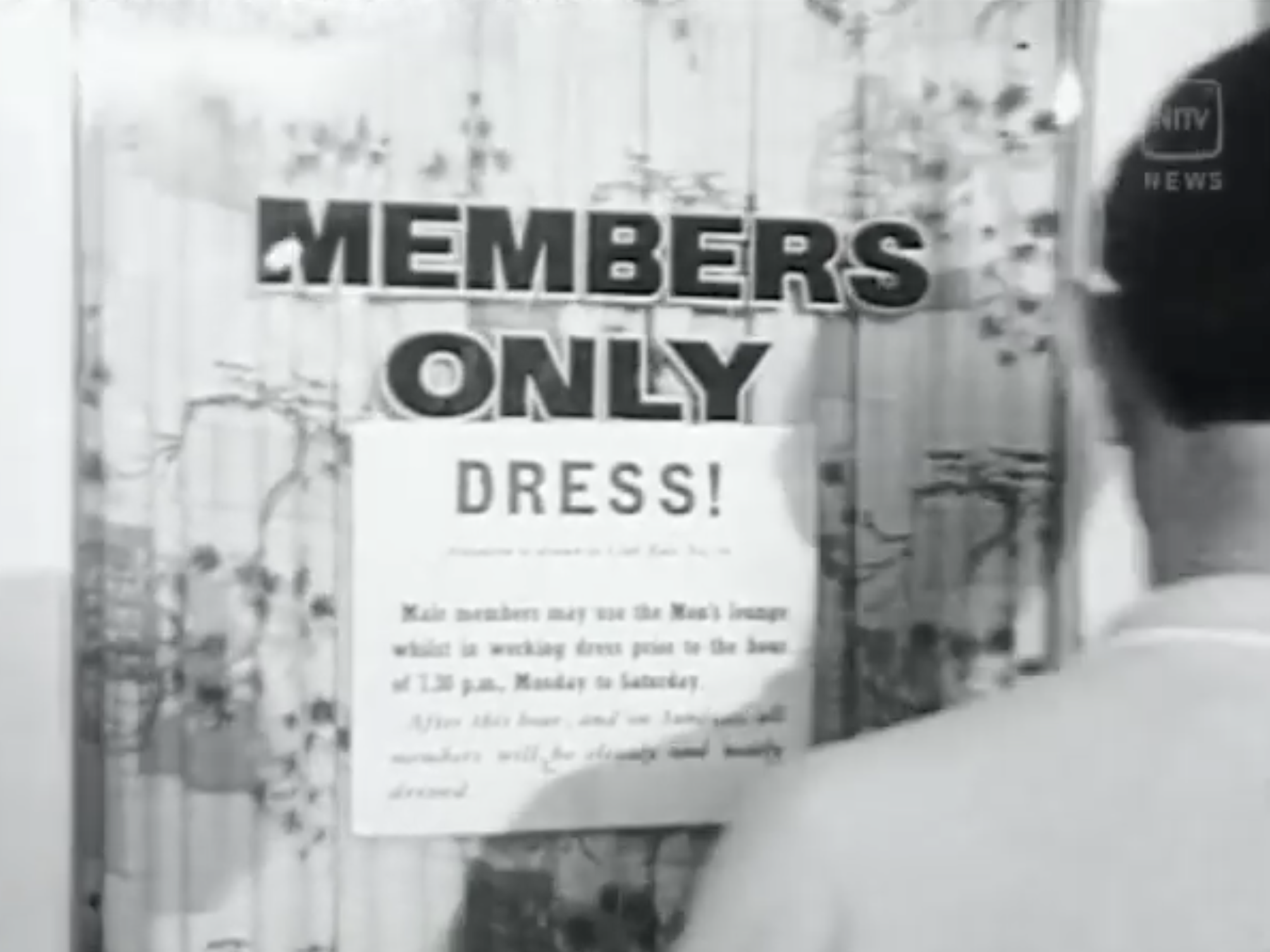
COMMUNITY | DEFINING MOMENT. 1965 Freedom Ride
“In 1965, a group of students from the University of Sydney drew national and international attention to the appalling living conditions of Aboriginal people and the racism that was rife in New South Wales country towns. Known as the Freedom Ride, this 15-day bus journey through regional New South Wales would become a defining moment in Australian activism.”–AIATSIS
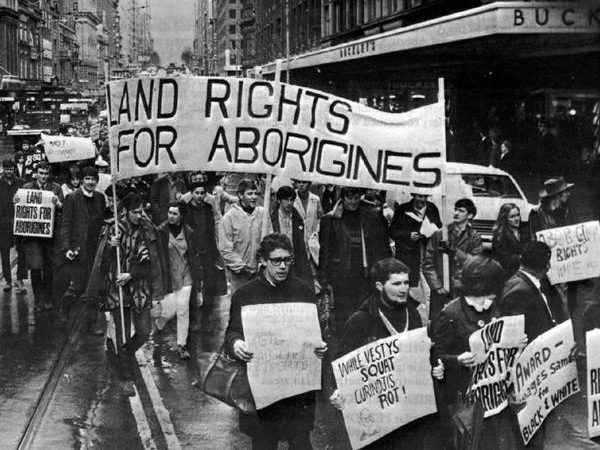
COMMUNITY | DEFINING MOMENT. Wave Hill Walk-Off, 23 August 1966
“On 23 August 1966, 200 Gurindji stockmen, domestic workers and their families initiated strike action at Wave Hill station in the Northern Territory.
“Negotiations with the station owners, the international food company Vestey Brothers broke down, leading to a seven-year dispute.
“This eventually led to the return of a portion of their homelands to the Gurindji people in 1974, and the passing of the first legislation that allowed for First Nations peoples to claim land title if they could prove a traditional relationship to the country.”–NMA

COMMUNITY | MILESTONE. The 1967 Referendum, 27 May 1967
“When the Constitution first came into being in 1901 there were only two parts that referred to the First Peoples of Australia:
“Section 51 (xxvi) gave the Commonwealth power to make laws with respect to ‘people of any race, other than the Aboriginal race in any state, for whom it was deemed necessary to make special laws’; and,
“Section 127 provided that ‘in reckoning the numbers of people of the Commonwealth, or of a State or other part of the Commonwealth, aboriginal natives shall not be counted’.
“This meant that Aboriginal and Torres Strait Islander people weren’t recognised as part of the Australian population.
“It also meant that the states could create their own policies for Aboriginal and Torres Strait Islander peoples. Dispossession was rampant, as was oppression and control of Aboriginal and Torres Strait Islander peoples’ lives.
“The states enacted Aboriginal Protection Acts which gave them the legal right to remove children from their families.”
Explainer: The ’67 Referendum. A brief look at the historical context, campaign and outcome of the 1967 Referendum | NITV | Karina Marlow (May 2016)

COMMUNITY | MILESTONE. Wave Hill Handover, 16 August 1975
“On 16 August 1975, Prime Minister Gough Whitlam came to Daguragu. As he poured a handful of Daguragu soil into Vincent Lingiari’s hand, he said:
“Vincent Lingiari, I solemnly hand to you these deeds as proof in Australian law that these lands belong to the Gurindji people, and I put into your hands part of the earth as a sign that this land will be the possession of you and your children forever.”
“The ceremony was to mark the transfer of leasehold title to the Gurindji.”–National Archives of Australia
Prime Minister Gough Whitlam pours soil into the hand of traditional owner Vincent Lingiari by Mervyn Bishop | Art Gallery of South Australia (AGSA)

COMMUNITY | DEFINING MOMENT. Creation of the Woodward Royal Commission (a.k.a. Aboriginal Land Rights Commission) on 8 February 1973, and proclamation of the Aboriginal Land Rights (Northern Territory) Act on 9 December 1976
“The Whitlam Labor government had appointed a Royal Commission under Justice Edward Woodward to lay the groundwork for legislation for Aboriginal land rights in the Northern Territory. Although the commission had not concluded its work at the time the Whitlam government was dismissed, the Aboriginal Land Rights (Northern Territory) Act 1976 was passed by the Fraser coalition government on 9 December 1976.”–NMA
“The Royal Commission produced two reports that recommended a package of significant reform. Among other key elements, the Commission recommended the establishment of Aboriginal Land Councils in the Northern Territory, as well as legislation to restore Aboriginal ownership of land. That recommendation eventually became the Aboriginal Land Rights (Northern Territory) Act 1976 (Cth)—the first Australian law that allowed for First Peoples to have their land rights recognised in Australian law.
“As a direct result of the Woodward Royal Commission, today about 50 per cent of the Northern Territory and 85 per cent of its coastline is Aboriginal land.”–ANTAR
The Woodward Royal Commission Factsheet 2022

COMMUNITY | DEFINING MOMENT. Formation of the Royal Commission Into Aboriginal Deaths In Custody [a.k.a. the Muirhead Commission], 10 August 1987
“On 10 August 1987 Prime Minister Hawke announced the formation of a Royal Commission to investigate the causes of deaths of Aboriginal people who were held in state and territory gaols.
“The Royal Commission was established in response to a growing public concern that deaths in custody of Aboriginal people were too common and poorly explained.
“The Letters Patent formally establishing the Commission were issued by the Governor-General on 16 October 1987. Similar Letters Patent were issued by the states and the Northern Territory.”–National Archives of Australia
Royal Commission into Aboriginal Deaths in Custody (RCIADIC) (1987–1991)
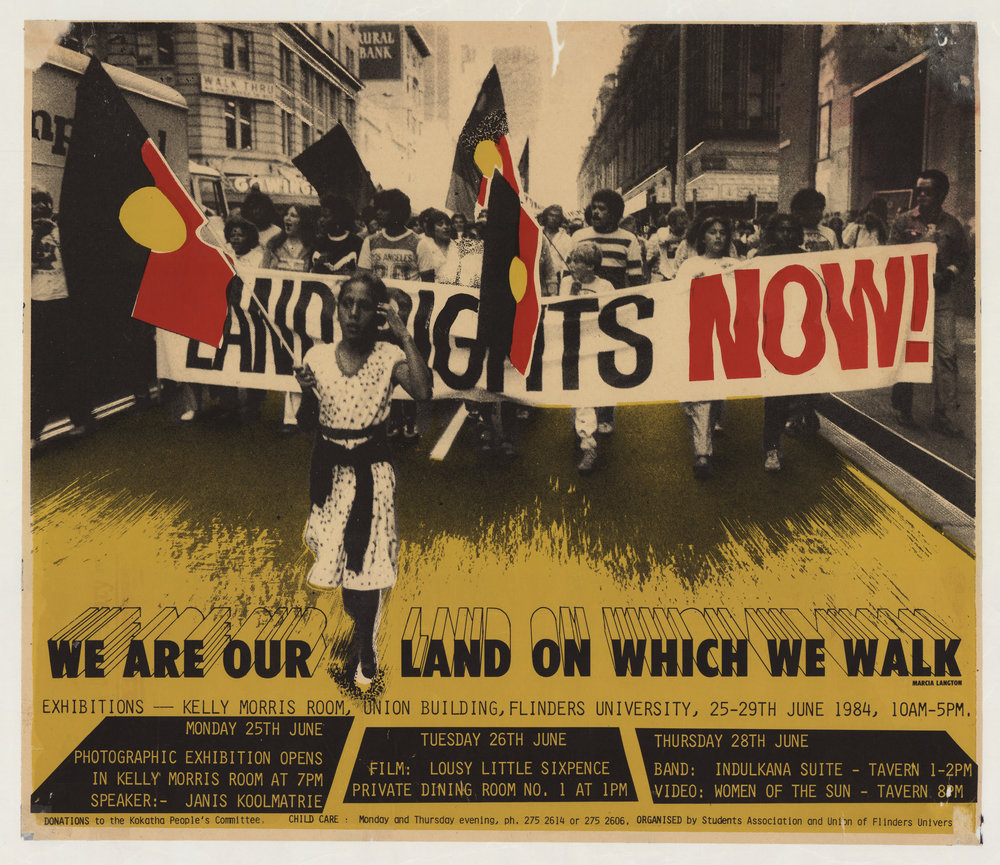
COMMUNITY | MILESTONE. Mabo Native Title Decision, 3 June 1992
“On 3 June 1992, the High Court of Australia decided that terra nullius should not have been applied to Australia.
“This decision recognised that Aboriginal and Torres Strait Islander peoples have rights to the land — rights that existed before the British arrived and can still exist today.
“The Mabo decision was a turning point for the recognition of Aboriginal and Torres Strait Islander peoples’ rights, because it acknowledged their unique connection with the land. It also led to the Australian Parliament passing the Native Title Act in 1993.”–Reconciliation Australia
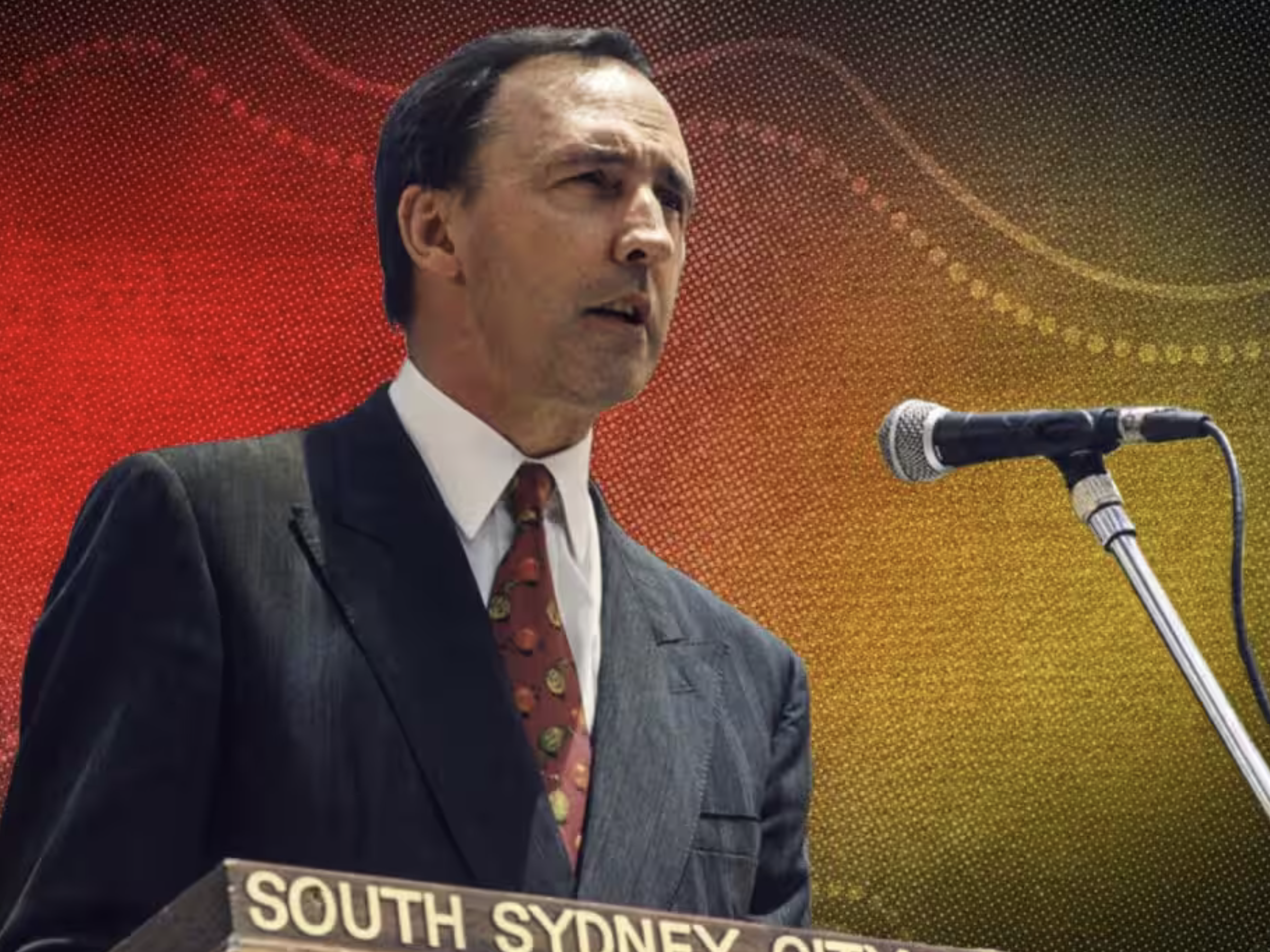
COMMUNITY | DEFINING MOMENT. Redfern Park Speech, 10 December 1992
Prime Minister Paul Keating at the Australian Launch of the International Year For The World’s Indigenous People, Redfern Park, 10 December 1992 (16mins) | National Archives of Australia
“(…) Just a mile or two from the place where the first European settlers landed, in too many ways it tells us that their failure to bring much more than devastation and demoralisation to Aboriginal Australia continues to be our failure. More I think than most Australians recognise,
The plight of Aboriginal Australians affects us all.
“In Redfern it might be tempting to think that the reality Aboriginal Australians face is somehow contained here, and that the rest of us are insulated from it. But of course, while all the dilemma may exist here, they are far from contained. We know the same dilemmas and more are faced all over Australia.
“That is perhaps the point of this Year of the World’s Indigenous People: to bring the dispossessed out of the shadow, to recognise that they are part of us, and that we cannot give Indigenous Australians up without giving up many of our own most deeply held values, much of our own identity and our own humanity.
“Nowhere In the world, I would venture, is the message more stark than it is in Australia. We simply cannot sweep injustice aside. Even if our own conscience allowed us to, I am sure, that in due course, the world and the people of our region would not.
“There should be no mistake about this: our success in resolving these issues will have a significant bearing on our standing in the world. However intractable the problems seem, we cannot resign ourselves to failure any more than we can hide behind the contemporary version of Social Darwinism which says that to reach back for the poor and dispossessed is to risk being dragged down. That seems to me not only morally indefensible, but bad history.”
‘Keating told the truth’: Stan Grant, Larissa Behrendt and others remember the Redfern speech 30 years on | The Guardian (10 December 2022). “Paul Keating was the first Australian prime minister to acknowledge the damage done by invasion, dispossession and assimilation policies.”

COMMUNITY | MILESTONE. Native Title Act 1993
“The Native Title Act 1993 (Cth) is a law passed by the Australian Parliament, the purpose of which is “to provide a national system for the recognition and protection of native title and for its co-existence with the national land management system”. The Act was passed by the Keating government following the High Court’s decision in Mabo v Queensland (No 2) (1992). The Act commenced operation on 1 January 1994.”–Wikipedia

COMMUNITY | MILESTONE. Bringing Them Home: Report of the National Inquiry into the Separation of Aboriginal and Torres Strait Islander Children from Their Families, 26 May 1997
“The report marked a pivotal moment in the controversy that has come to be known as the Stolen Generations.
“The inquiry was established by the federal Attorney-General, Michael Lavarch, on 11 May 1995, in response to efforts made by key Indigenous agencies and communities concerned that the general public’s ignorance of the history of forcible removal was hindering the recognition of the needs of its victims and their families and the provision of services. The 680-page report was tabled in Federal Parliament on 26 May 1997.”–Wikipedia
National Sorry Day, 26 May 1998
“National Sorry Day, officially the National Day of Healing, is an event held annually in Australia on 26 May commemorating the Stolen Generations. It is part of the ongoing efforts towards reconciliation between Indigenous and non-Indigenous Australians.
“The first National Sorry Day was held on the first anniversary of the 1997 Bringing Them Home report. It examined the government practices and policies which led to the Stolen Generations and recommended support and reparations to the Indigenous population.”–Wikipedia
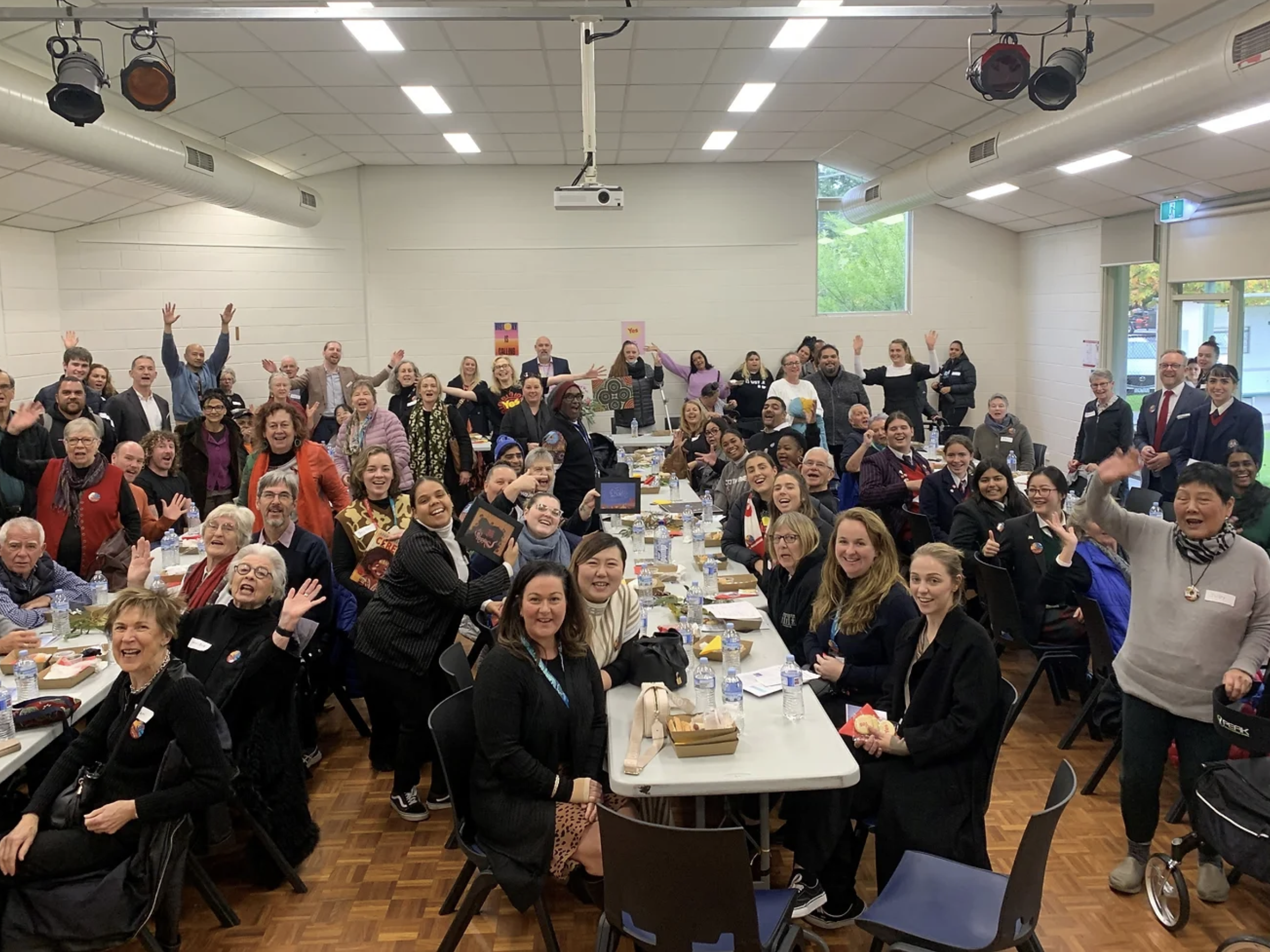
COMMUNITY | ANNUAL EVENT. Sorry Day Lunch hosted by Port Phillip Citizens For Reconciliation
Port Phillip Citizens For Reconciliation, formed in 1997, hosts an annual Sorry Day Lunch in May.
“Reconciliation is a national process promoting unity and respect between Aboriginal and Torres Strait Islanders and the wider community. Reconciliation promotes justice and equity for all Australians.
“We are committed to promoting an understanding of the culture, heritage and history of Aboriginal and Torres Strait Islanders, both nationally and locally; building closer relationships between Indigenous and non-Indigenous peoples in our community; and providing a forum for community discussion because we recognise that information and understanding are integral to the Reconciliation process.”–PPCFR

COMMUNITY | DEFINING MOMENT. Walk For Reconciliation, 28 May 2000
“[On 28 May 2000] about 250,000 people, Indigenous and non-Indigenous, made their way across the famous Sydney landmark in a continuous stream that lasted nearly six hours. It was the largest political demonstration ever held in Australia.
“The bridge walk seemed to show that the Prime Minister was out of step with public sentiment, or at least that many of those who supported reconciliation were willing to make an effort to show it.
“John Howard did not take part, sending in his place Aboriginal Affairs Minister, John Herron, and Minister assisting the Prime Minister for Reconciliation, Phillip Ruddock. However, several Coalition backbenchers attended as did many Labor Party frontbenchers along with NSW Premier Bob Carr.”–National Museum of Australia
COMMUNITY | MILESTONE. Reconciliation Australia, established in January 2001
“Reconciliation in Australia is a process which officially began in 1991, focused on the improvement of relations between the Aboriginal and Torres Strait Islander peoples of Australia and the rest of the population.
“The Council for Aboriginal Reconciliation (CAR), created by the government for a term of ten years, laid the foundations for the process, and created the peak body for implementation of reconciliation as a government policy, Reconciliation Australia, in 2001.–Wikipedia
“At its heart, reconciliation is about strengthening relationships between Aboriginal and Torres Strait Islander peoples and non-Indigenous peoples, for the benefit of all Australians.”–Reconciliation Australia
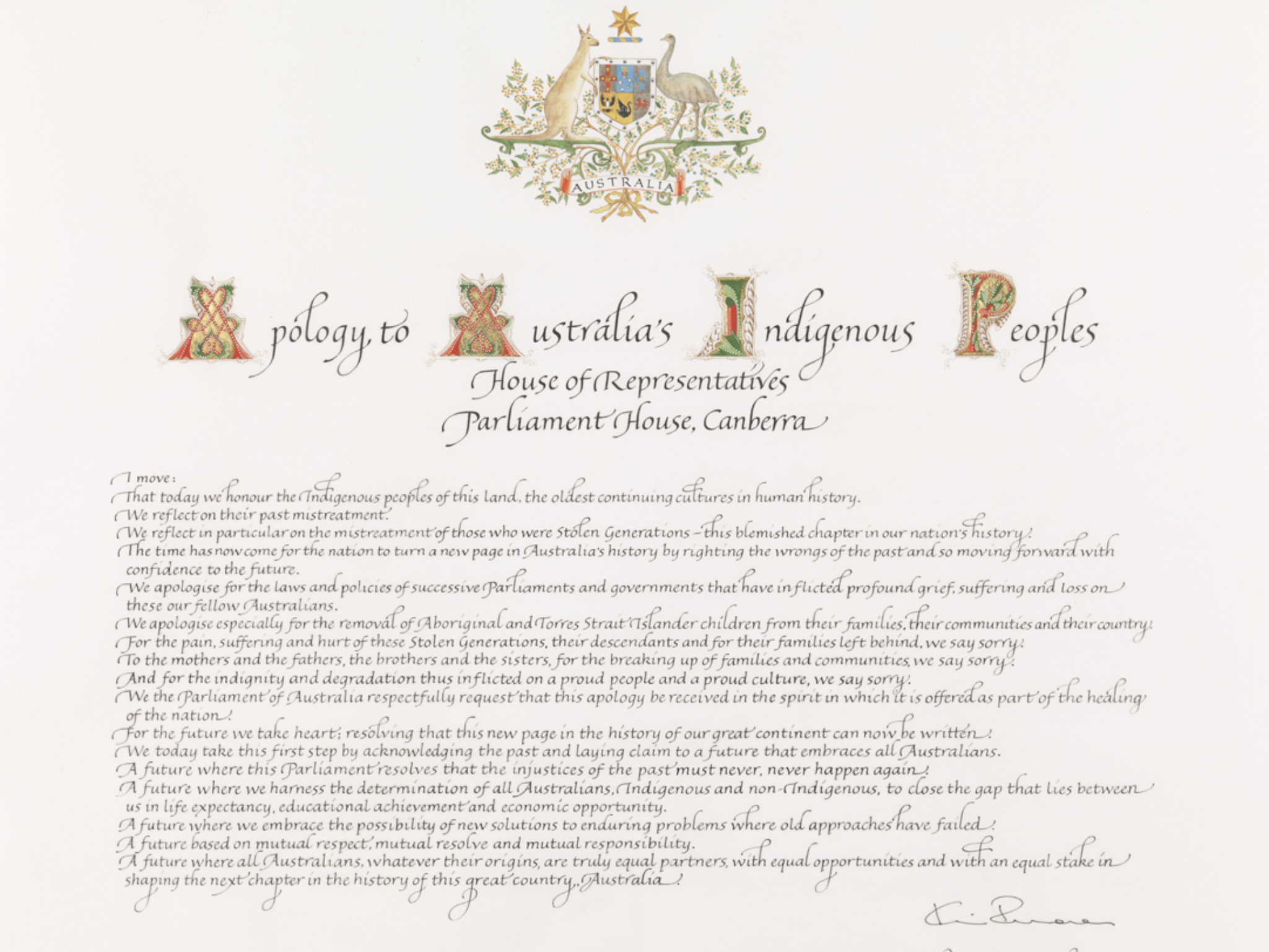
COMMUNITY | DEFINING MOMENT. National Apology To The Stolen Generations, 13 February 2008
“(…) Today we honour the Indigenous peoples of this land, the oldest continuing cultures in human history.
“We reflect on their past mistreatment.
“We reflect in particular on the mistreatment of those who were Stolen Generations—this blemished chapter in our nation’s history.
“The time has now come for the nation to turn a new page in Australia’s history by righting the wrongs of the past and so moving forward with confidence to the future.
“We apologise for the laws and policies of successive Parliaments and governments that have inflicted profound grief, suffering and loss on these our fellow Australians.
“We apologise especially for the removal of Aboriginal and Torres Strait Islander children from their families, their communities and their country.
“For the pain, suffering and hurt of these Stolen Generations, their descendants and for their families left behind, we say sorry.
“To the mothers and the fathers, the brothers and the sisters, for the breaking up of families and communities, we say sorry.
“And for the indignity and degradation thus inflicted on a proud people and a proud culture, we say sorry.
“We the Parliament of Australia respectfully request that this apology be received in the spirit in which it is offered as part of the healing of the nation.”
National Apology To The Stolen Generations Transcript PDF
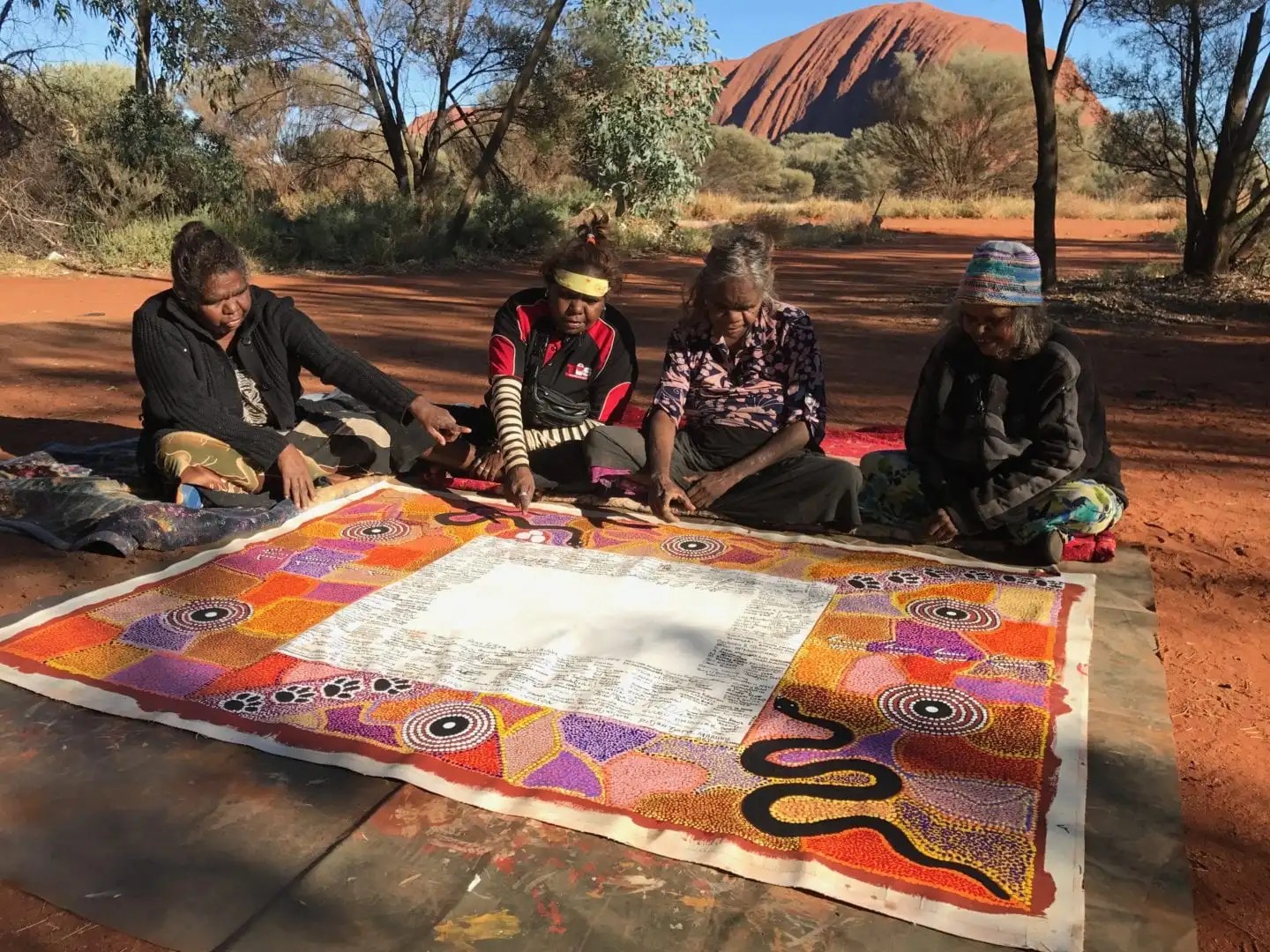
COMMUNITY | DEFINING MOMENT. Uluru Statement From The Heart, 26 May 2017
“The Uluru Statement From The Heart is a 2017 petition to the people of Australia, written and endorsed by the Australian Aboriginal and Torres Strait Islander leaders selected as delegates to the First Nations National Constitutional Convention [23–26 May 2017].
“The document calls for substantive constitutional change and structural reform through the creation of two new institutions; a constitutionally protected First Nations Voice and a Makarrata Commission, to oversee agreement-making and truth-telling between governments and First Nations.
“Such reforms should be implemented, it is argued, both in recognition of the continuing sovereignty of Indigenous peoples and to address structural power differences that has led to severe disparities between Indigenous and non-Indigenous Australians. These reforms can be summarised as Voice, Treaty and Truth.”–Wikipedia
“We seek constitutional reforms to empower our people and take a rightful place in our own country.”
“We call for the establishment of a First Nations Voice enshrined in the Constitution.”
“We seek a Makarrata Commission to supervise a process of agreement-making between governments and First Nations, and truth-telling about our history.”
The Uluru Statement From The Heart PDF

COMMUNITY | ANNIVERSARY. 1991–2021. Royal Commission Into Aboriginal Deaths In Custody (RCIADIC) (1987–1991)
Decades on from royal commission into deaths in custody, Indigenous community still waits for change | ABC News | Isabella Higgins (11 April 2021). “Since the royal commission’s final report, it’s estimated at least another 450 Indigenous people have died in custody.”–ABC News
“A related issue, not investigated by the Commission, is the disproportionately high number of Indigenous Australians who come under some form of custody or who are imprisoned under the law. One of the outcomes of the Commission was the establishment of a National Deaths in Custody Monitoring and Research Program at the Australian Institute of Criminology.
“The Royal Commission recommended that the offence of public drunkenness be abolished (recommendation 79). By a legislative change in February 2021 [30 years later], Victoria finally decriminalised the offence of being drunk in a public place with effect from 7 November 2023.”–Wikipedia
COMMUNITY | MILESTONE. Yoorrook Justice Commission, 12 May 2021
“The Yoorrook Justice Commission is the first formal truth-telling process into historical and ongoing injustices experienced by First Peoples in Victoria.
“Yoorrook was set up by agreement between the First Peoples’ Assembly of Victoria and the Victorian Government, but operates independently of both.
“Yoorrook is led by five Commissioners, of whom 4 are Aboriginal and 3 are Victorian First Peoples. The Commissioners bring a vast range of knowledge and experience about First Peoples’ knowledge, systemic disadvantage, land rights, history, law, trauma and healing.”
Yoorrook Justice Commission FAQs
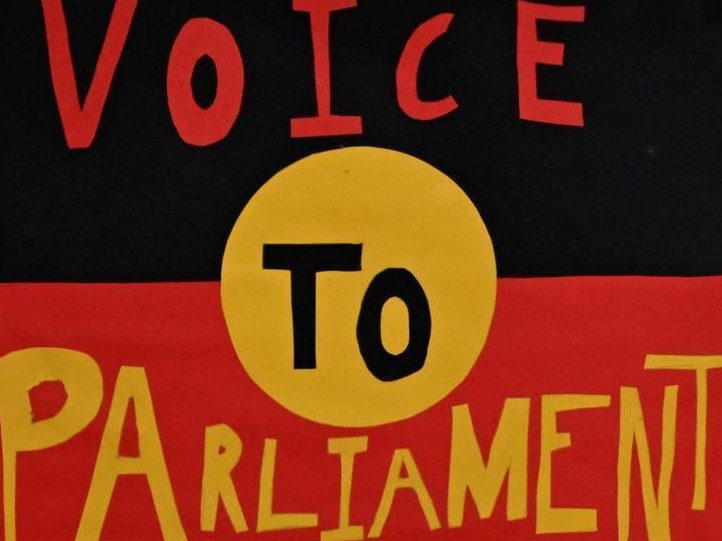
COMMUNITY | MILESTONE. Voice to Parliament Referendum, 14 October 2023
“In his election victory speech on 21 May 2022, Prime Minister Anthony Albanese (…) committed to the implementation of the Uluru Statement from the Heart in full.
“To be clear, this process for seeking our constitutional recognition commenced back in 1999 when then-Prime Minister John Howard sought to recognise us in the preamble of the Australian Constitution as First Peoples to this continent. This proposal, however, was rejected by the Australian people when it was put to them at the 1999 referendum.
“This rejection came largely from the fact that minimal-to-no consultative effort had been undertaken by the Howard Government with Aboriginal and Torres Strait Islander peoples, or the broader Australian public. The proposal offered only symbolic recognition, which was a concern amongst many First Nations peoples that it was unable to deliver on recognising substantive rights through meaningful structural reform.”–Dr Dani Larkin | UNSW
“In October 2017, the then [Turnbull Liberal-National] Coalition government rejected the Voice proposal, characterising it as a “radical” constitutional change that would not be supported by a majority of Australians in a referendum. Following this, in May 2022 Labor leader Anthony Albanese endorsed the Uluru Statement on the occasion of his 2022 election victory and committed to implementing it in full. However, the Voice was rejected at a subsequent referendum in 2023, with the government noting that further action on Treaty and Truth will take some time.”–Wikipedia
“Embedding a Voice in the Constitution would recognise the special place of Aboriginal and Torres Strait Islander people in Australia’s history, but importantly would also mean that it can’t be shut down by successive Governments.”
–Reconciliation Australia
COMMUNITY | DEFINING MOMENT. Leader of the Nationals David Littleproud announces they will oppose the Indigenous Voice to Parliament, 28 November 2022
Nationals to oppose Indigenous Voice to Parliament | ABC News | Brett Worthington (28 November 2022)
Noel Pearson says ‘kindergarten kid’ David Littleproud capitulated on Voice to Parliament in blistering rebuke of Nationals | ABC News | Jake Evans (29 November 2022)
“One of Australia’s most prominent Indigenous voices has offered a scathing assessment of “kindergarten kid” David Littleproud, accusing the Nationals leader of backflipping on support for an Indigenous Voice to Parliament being written into the constitution.
“Mr Pearson, who served as a member of the expert panel on constitutional recognition of Indigenous Australians, said the Nationals were previously supportive of the Voice in his conversations with them.
“He accused Mr Littleproud of “capitulating” to newly-elected senator Jacinta Nampijinpa Price — a vocal opponent of the body.
“I am very surprised, because I have spoken to almost every National senator and MP over recent years, and of all the political parties the Nationals were the most supportive of the Voice,” Mr Pearson said.
“It’s obviously Jacinta Price’s entry into the parliament that has turned everything around, but it is also this leader, this supposed leader Littleproud, little pride.”
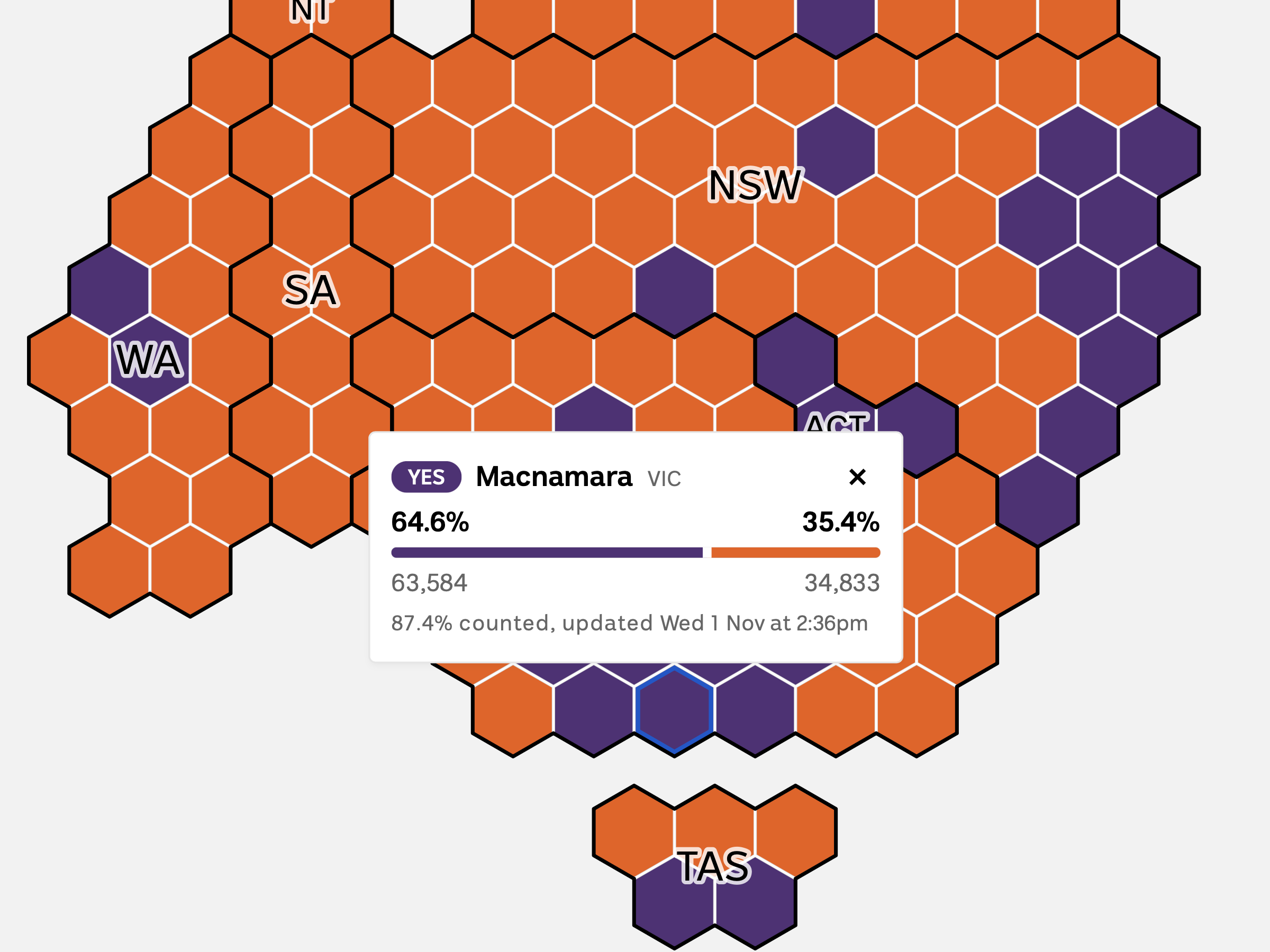
COMMUNITY | MILESTONE. Referendum Result for Macnamara, Victoria: 64.6% YES
Beyond No, here’s what we know about the Voice results | ABC News | Tim Leslie, Ashley Kyd, Julian Fell, Ben Spraggon and Matt Liddy (15 October 2023)
Paul Keating says voice referendum was ‘wrong fight’ and has ‘ruined the game’ for a treaty. Former PM accuses John Howard and Tony Abbott of ‘outrageously and wilfully misinterpreting’ result in attempt to return to ‘great assimilation project’ | The Guardian | Lenore Taylor (27 October 2023)
“In an interview with Guardian Australia, Keating accused the former Liberal prime ministers John Howard and Tony Abbott, and the historian Geoffrey Blainey [born 11 March 1930], of “outrageously and wilfully misinterpreting” the referendum result in an attempt to return to “the great assimilation project”.
“”Indigenous Australians never needed us to recognise them,” he said. “As I told them, yours is a massive and deeply historic problem. Your country was invaded and you were dispossessed of it and many of you were murdered on the way through.
“You need a political solution, not a legal one; a few rinky-dink legal words in the constitution is not the answer here. The answer is to deal with the history and the forces at hand.
“I have always believed this is their country, they are right to claim the legitimacy of their occupation of it, and wanting to be in the colonial constitution of their colonial dispossessors was a capitulation on that point.””–The Guardian (27 October 2023)
Detailed analysis of the 2023 Voice to Parliament Referendum and related social and political attitudes | ANU | Biddle, Gray, McAllister & Qvortrup (Published 2023)

COMMUNITY | DEFINING MOMENT. Open Letter: Statement For Our People And Country, 22 October 2023
“To the Prime Minister and every Member of the House of Representatives and the Senate of the Commonwealth Parliament,
“This is an open letter which will be circulated to the Australian public and media.
“Aboriginal and Torres Strait Islander peoples have observed a week of silence across Australia since the outcome of the Referendum last Saturday 14 October 2023. Aboriginal and Torres Strait Islander flags have flown half-mast and we have refrained from media commentary, even as politicians, governments, media commentators and analysts have spent a week exonerating – and indeed, lauding – the nobility of the 60.8 per cent of Australians who voted to reject Constitutional Recognition of Aboriginal and Torres Strait Islander people as the First Peoples of Australia.
“These are the collective insights and views of a group of Aboriginal and Torres Strait Islander leaders, community members and organisations who supported Yes:
1.
Aboriginal and Torres Strait Islander peoples are in shock and are grieving the result. We feel acutely the repudiation of our peoples and the rejection of our efforts to pursue reconciliation in good faith. That people who came to our country in only the last 235 years would reject the recognition of this continent’s First Peoples – on our sacred land which we have cared for and nurtured for more than 65,000 years – is so appalling and mean-spirited as to be utterly unbelievable a week following. It will remain unbelievable and appalling for decades to come.
2.
We thank the 5.51 million Australians who voted Yes to recognition. This represents approximately 39.2 per cent of Australian voters on 14 October 2023. At the 2022 Federal Election the Australian Labor Party received support from 32.58 per cent of voters, the Liberal Party 23.89 per cent, the National Party 3.6 per cent and One Nation 4.96 per cent. We thank those Australians who gave Yes more support at this Referendum than they did to any political party.
3.
We acknowledge the resounding Yes vote in discrete and remote Aboriginal and Torres Strait Islander communities. The high levels of support for Yes in our communities exposes the No Campaign’s lies, taken up by the media even in the last week of the campaign. The situation of these communities needs to be addressed sooner rather than later.
4.
Australia is our country. We accept that the majority of non-Indigenous voting Australians have rejected recognition in the Australian Constitution. We do not for one moment accept that this country is not ours. Always was. Always will be. It is the legitimacy of the non-Indigenous occupation in this country that requires recognition, not the other way around. Our sovereignty has never been ceded.
5.
The Constitution still belongs to those who the founding fathers originally intended it for and remains unchanged in our exclusion. We were asked to be recognised over a decade ago; we sought to be included in a meaningful way and that has been rejected. In refusing our peoples’ right to be heard on matters that affect us, Australia chose to make itself less liberal and less democratic. Our right to be heard continues to exist both as a democratic imperative for this nation, and as our inherent right to self-determination. The country can deny the former but not the latter. A ‘founding document’ without recognition of First Peoples of this country continues the process of colonisation. It is clear no reform of the Constitution that includes our peoples will ever succeed. This is the bitter lesson from 14 October.
6.
The support for the referendum collapsed from the moment Liberal and National Party leaders, Mr Dutton and Mr Littleproud, chose to oppose the Voice to Parliament proposal after more than a decade of bipartisan support. The proposal was tracking 60 per cent support compared to 40 per cent opposition for several years until the National and Liberal parties preferred wanton political damage over support for some of this country’s most disadvantaged people. There was little the Yes campaign could do to countervail this.
7.
Lies in political advertising and communication were a primary feature of this campaign. We know that the No campaign was funded and resourced by conservative and international interests who have no stake or genuine interest in the lives of Aboriginal and Torres Strait Islander people. We know this funding supported multiple No campaigns that intentionally argued in varying directions to create doubt and fear in both non-Indigenous and Indigenous communities. This included resurrecting scare campaigns seen during the 1990s against land rights, but the scale of deliberate disinformation and misinformation was unprecedented, and it proliferated, unchecked, on social media, repeated in mainstream media and unleashed a tsunami of racism against our people. We know that the mainstream media failed our people, favouring ‘a false sense of balance’ over facts.
8.
There has always been racism against First Nations people in Australia. It increased with multiple daily instances during the campaign and was a powerful driver for the No campaign. But this campaign went beyond just racism. ‘If you don’t know – Vote No’ gave expression to ignorance and licensed the abandonment of civic responsibility on the part of many voters who voted No. This shameful victory belongs to the Institute of Public Affairs, the Centre for Independent Studies and mainstream media.
9.
Post-referendum commentaries that exculpate those who voted No were expected as the usual kind of post-election approbation of the electorate. The truth is that the majority of Australians have committed a shameful act whether knowingly or not, and there is nothing positive to be interpreted from it. We needed truth to be told to the Australian people.
10.
We will maintain the vision of the Uluru Statement from the Heart. We will continue to uphold the outcomes of the Uluru Dialogues to which more than 1,200 Aboriginal and Torres Strait Islander people from across the country contributed – culminating in the Uluru Statement signed by 250 people on 26 May 2017. It is evident that many Australians are unaware of our cultures, our histories, or the racism imbued in the Australian Constitution. That so many Australian people believe there is no race or division on race in the current Australian Constitution speaks to the need for better education on Australian history and better civics education. We have faith that the upswelling of support through this Referendum has ignited a fire for many to walk with us on our journey towards justice. Our truths have been silenced for too long.
11.
We want to talk with our people and our supporters about establishing – independent of the Constitution or legislation – an Aboriginal and Torres Strait Islander Voice to take up the cause of justice for our people. Rejection of constitutional recognition will not deter us from speaking up to governments, parliaments and to the Australian people. We have an agenda for justice in pursuit of our First Nations rights that sorely need a Voice – we will continue to follow our law and our ways, as our Elders and Ancestors have done.
12.
We will regather in due course and develop a plan for our future direction. While this moment will be etched into Australia’s history forever, today we think of our children, and our children’s children. Our work continues as it has always done. We will continue to fight to seek justice for our peoples. We are three per cent of the population, and you are 97 per cent.”
Statement For Our People And Country PDF
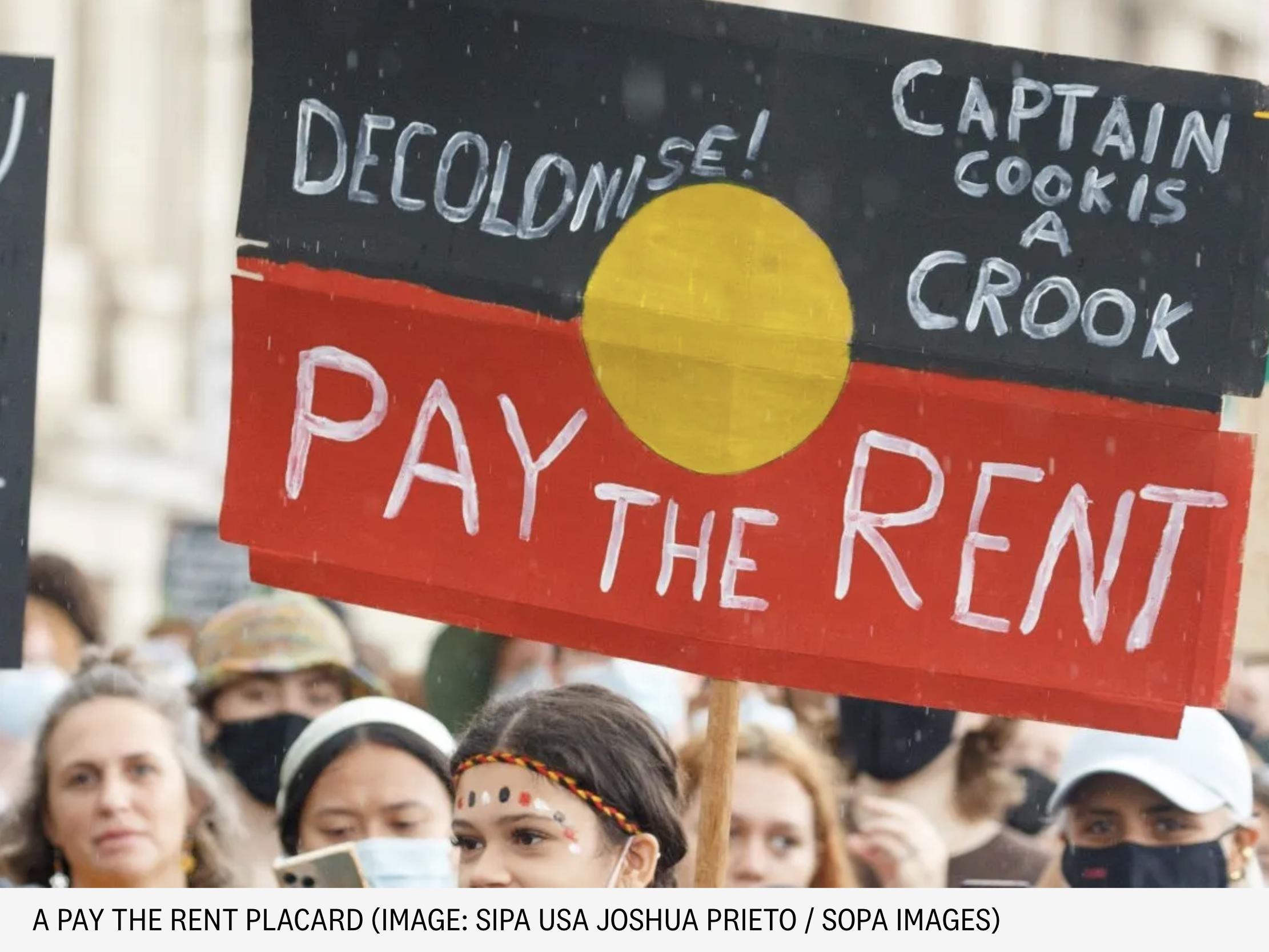
COMMUNITY | OPINION. Why It’s Time To Start Paying The Rent.
Why it’s time to start paying the rent | Crikey | Ben Abbatangelo (25 January 2024). “With Australia facing the biggest intergenerational wealth transfer it’s ever seen, now is the time to put economic independence and self-determination back in the hands of First Nations peoples.”
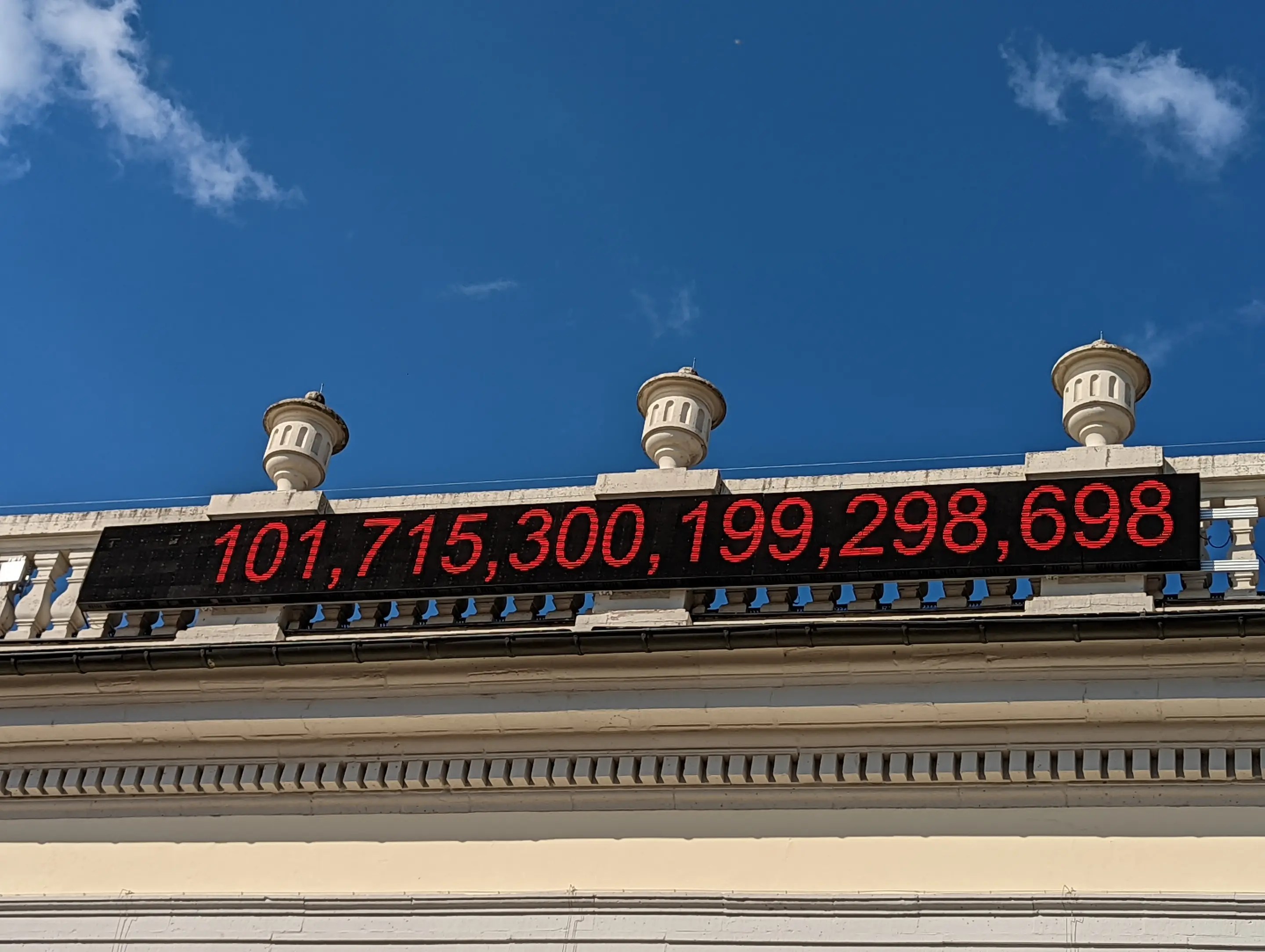
COMMUNITY | ART INSTALLATION. Pay The Rent: A running total of what’s owed to the First Nations’ people of this land. Presented in Melbourne as part of RISING 2024
Pay The Rent by Richard Bell (1–16 June 2024, State Library. “Numbers don’t lie. In 2022, artist Richard Bell (Kamilaroi, Kooma, Jiman, and Gurang Gurang) debuted Pay The Rent in Kassel, Germany for Documenta 15. The staggering sum, zooming upwards in red digits, represents the continual calculation of the rent owed to First Nations people by the Australian Government since Federation in 1901 for the use of their lands.
“Since the work was first displayed in 2022, it’s travelled to the Tate Gallery in London. Now it’s time give it its Australian debut in Naarm for RISING. And it’s still ticking. As Bell says, the reason it’s here is “to show that it’s too expensive to play this colonisation game. Don’t do it, because you’ll never be able to pay for it.””—RISING

COMMUNITY | MILESTONE. Victoria Police Apology To The Stolen Generations, 24 May 2024
Victorian police make ‘long overdue’ apology for their role in stolen generations | The Guardian | Benita Kolovos (24 May 2024). “Shane Patton says sorry for police involvement in the removal of Aboriginal children from their families and country over more than 100 years.”
Chief Commissioner’s Apology To The Stolen Generations | Victoria Police
Transcript PDF

COMMUNITY | RECONCILIATION. Now More Than Ever #NRW2024
“National Reconciliation Week’s theme for 2024, Now More Than Ever, is a reminder to all of us that no matter what, the fight for justice and the rights of Aboriginal and Torres Strait Islander people must continue.
“It is imperative that supporters of reconciliation stand up to defend and uphold the rights of First Nations peoples. To call out racism wherever we encounter it, and to actively reinforce the voices of Aboriginal and Torres Strait Islander peoples across this continent.
“Now more than ever, the work continues. In treaty making, in truth-telling, in understanding our history, in education, and in tackling racism.”–Reconciliation Australia
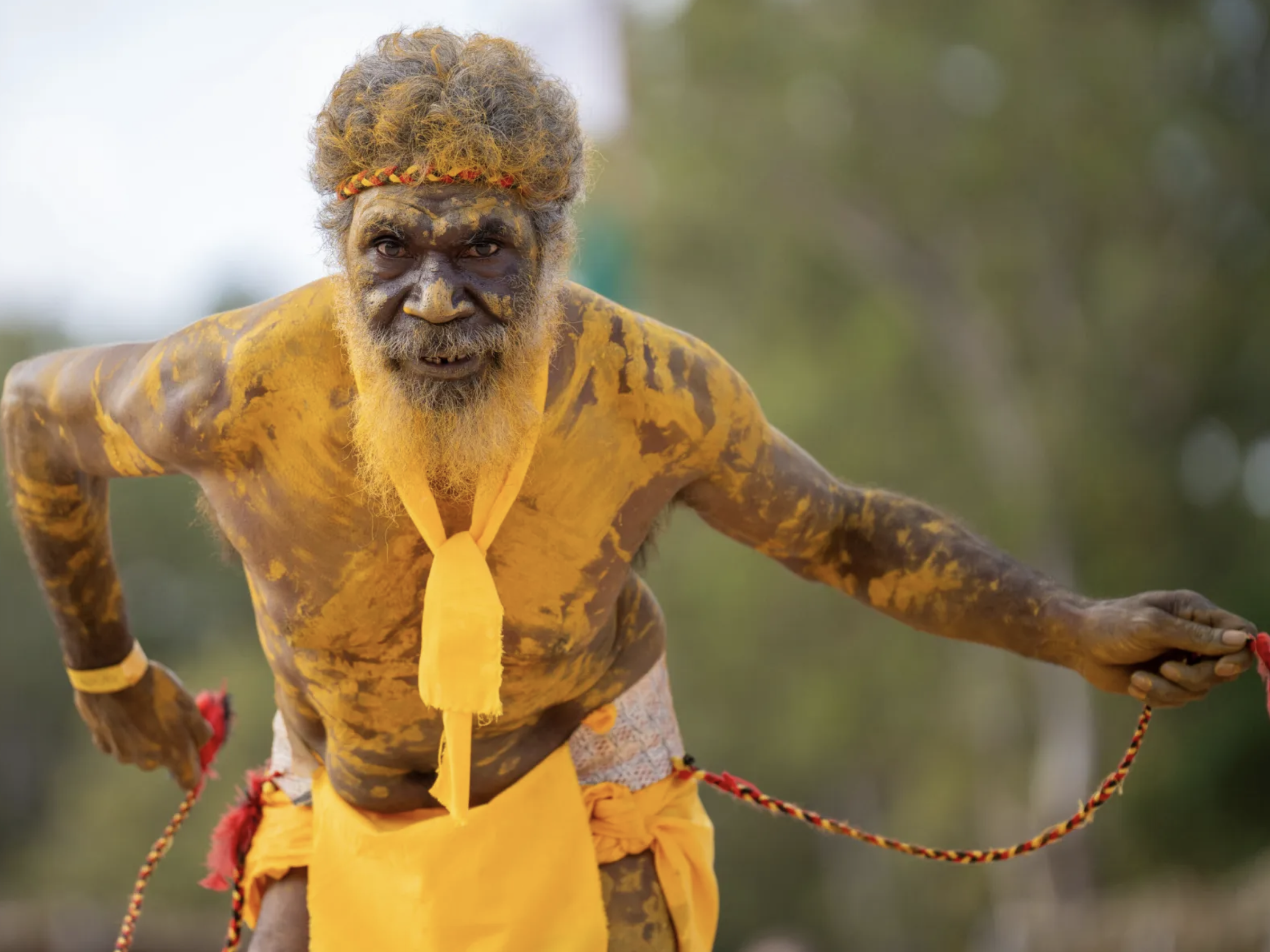
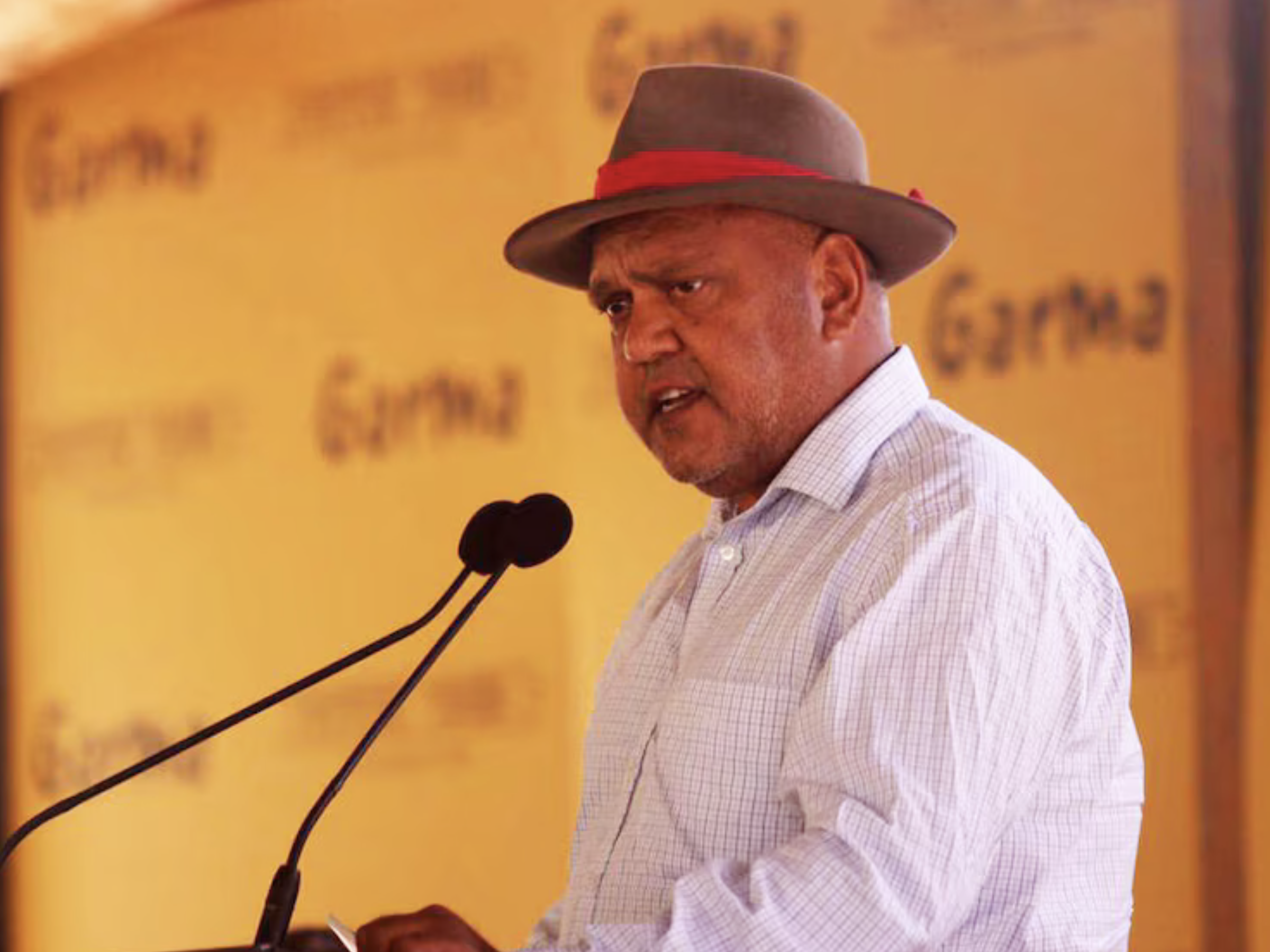
COMMUNITY | DEFINING MOMENT. Garma Festival, 2–5 August 2024
In Photographs: Garma Festival 2024 | Australian Geographic | AG Staff (6 August 2024)
“Garma Festival – Australia’s largest Indigenous gathering [hosted by the Yothu Yindi Foundation] – has just wrapped up for 2024 after a four-day celebration of Yolŋu life and culture.
“This year, the festival’s theme was ‘fire, strength, renewal’ – a response to the rejection of the Voice by the Australian people on 14 October 2023, says Yothu Yindi Foundation Chairman, Djawa Yunupiŋu.”–Australian Geographic
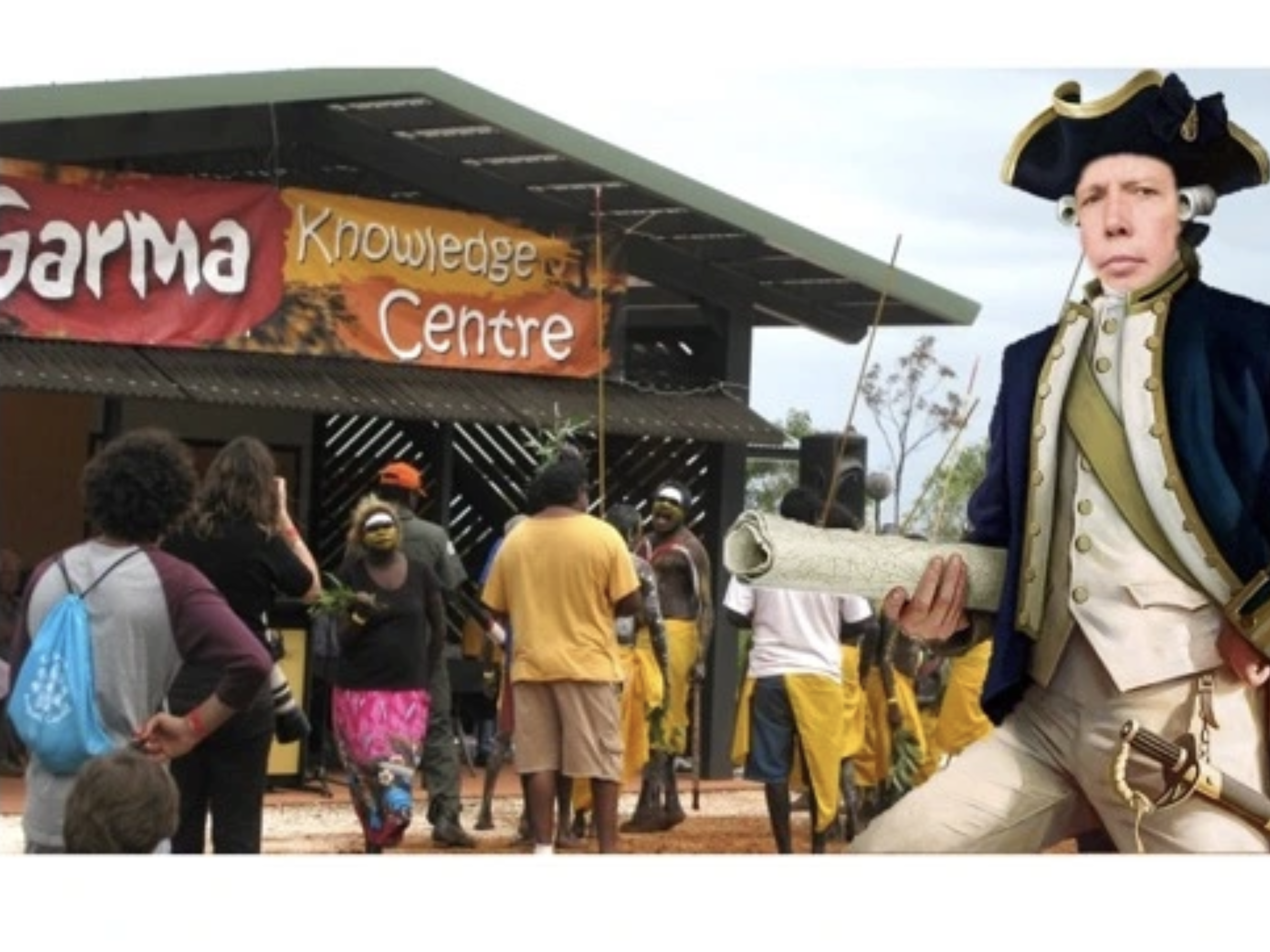
COMMUNITY | DEFINING MOMENT. Peter Dutton is still at war with Australia’s First Peoples
“On the eve of Garma, Dutton told reporters in Perth: “I just say this to the people of WA, under a government I lead there will be no Makarrata and there will be no revisiting of truth-telling.””
Peter Dutton and the future of reconciliation | The Saturday Paper no.512 | Paul Bongiorno | (10 August 2024). “In the red dust of East Arnhem Land, on the far reaches of the Northern Territory’s Gove Peninsula, Peter Dutton buried any pretence of national consensus on the importance of truth-telling regarding the dispossession of First Peoples or on recognition of their unique status in contemporary Australia. (…)
“There is no more talk from the opposition leader of another referendum to give constitutional recognition to First Nations people. That now looks as if it were a ruse to cover a deeper contempt that reared its head when Dutton chose to be absent from Kevin Rudd’s 2008 Apology. (…)
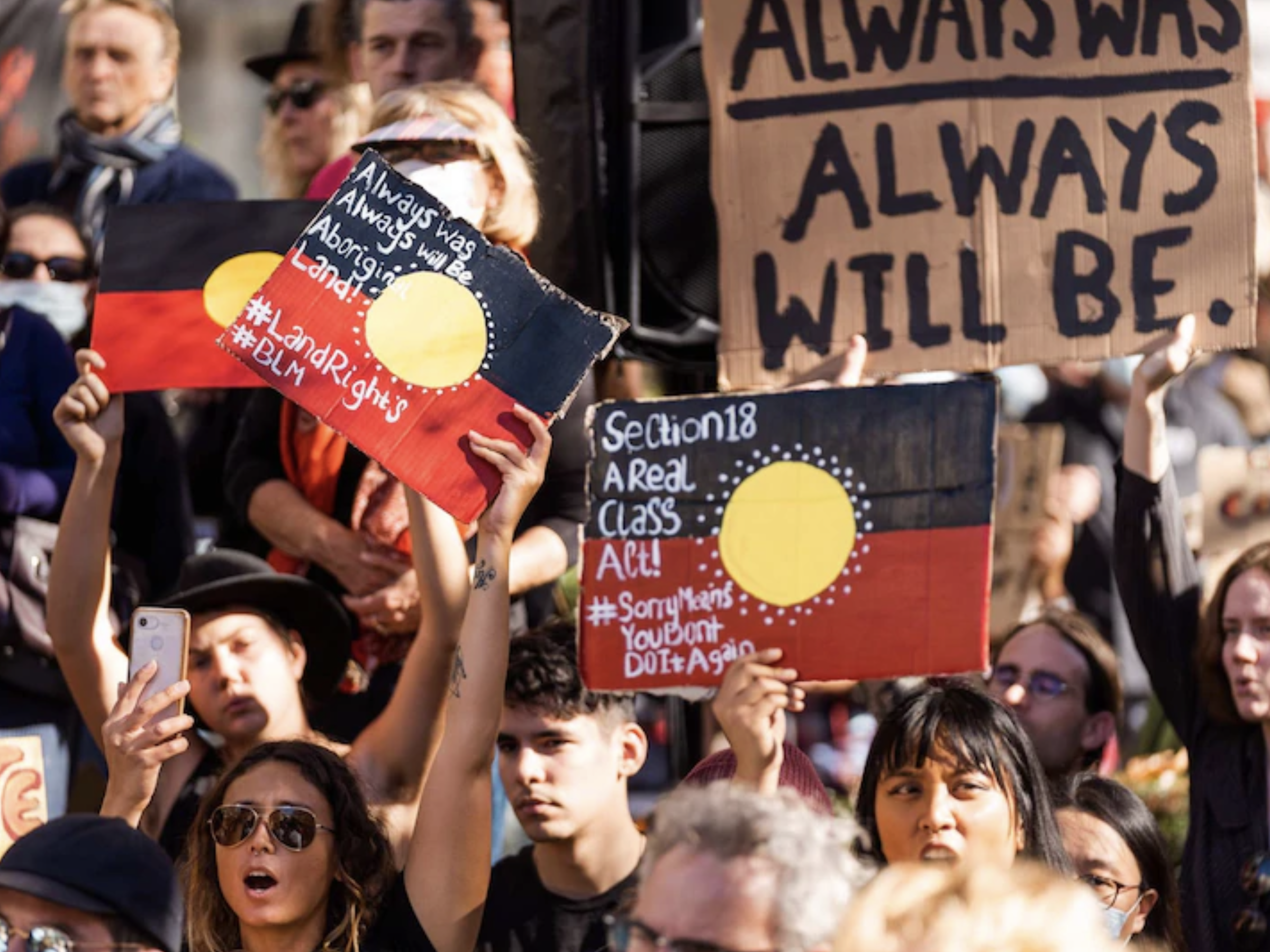
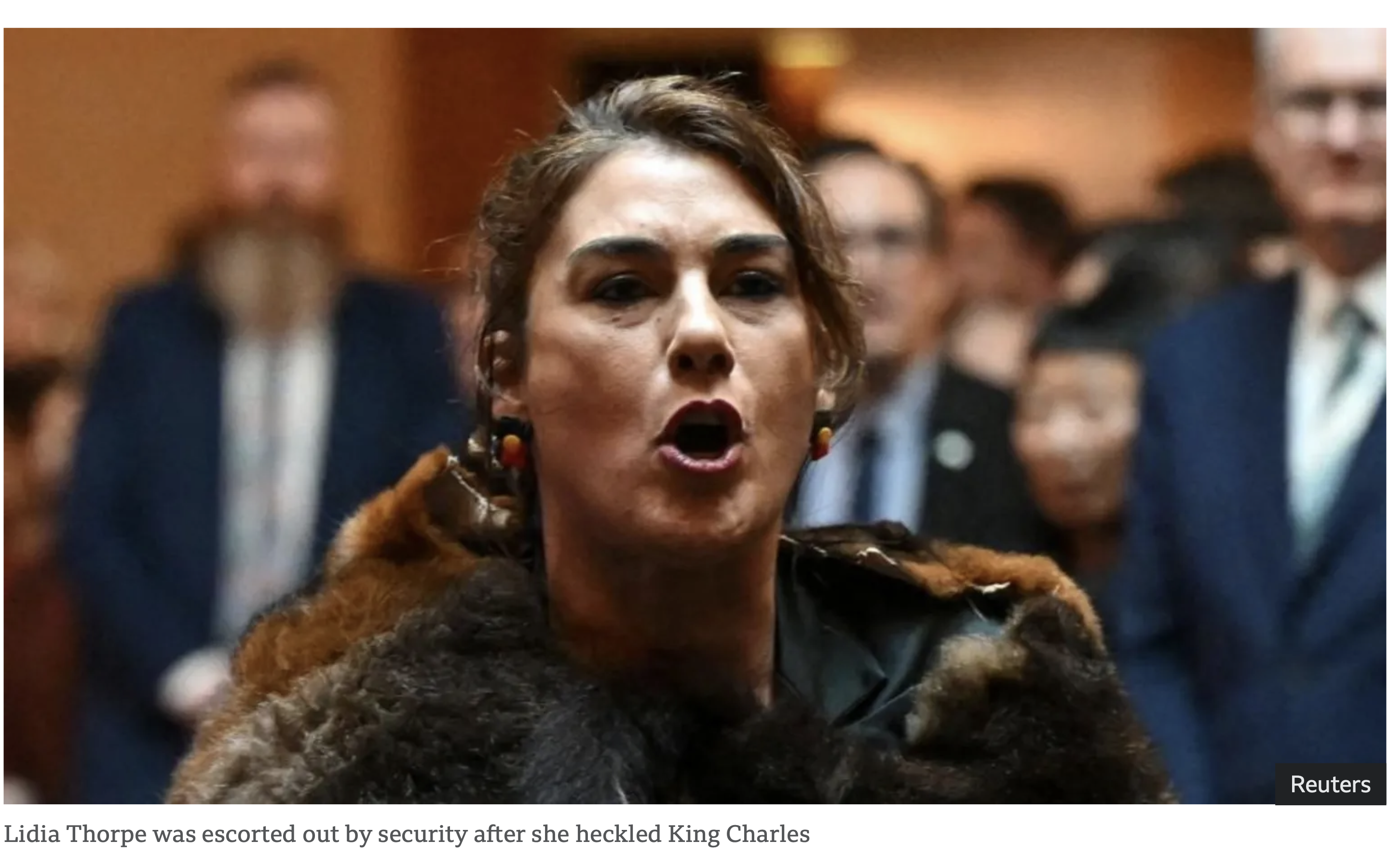
COMMUNITY | PROTEST. Charles III: Not My King—Lidia Thorpe
Why an Australian senator heckled King Charles | BBC | Katy Watson (22 October 2024). “I wanted to send a clear message to the King of England that he’s not the King of this country, he’s not my king, he’s not sovereign. To be sovereign you have to be of this land. He’s not of this land. How can he stand up there and say he’s the King of our country—he’s stolen so much wealth from our people and from our land and he needs to give that back. And he needs to entertain a conversation for a peace treaty in this country. We can lead that, we can do that—we can be a better country but we cannot bow to the coloniser whose ancestors he spoke about in there are responsible for mass murder, for mass genocide.”—Lidia Thorpe
POSTSCRIPTUM:
“Keating was the first Australian prime minister to publicly acknowledge that European settlers were responsible for the difficulties Australian Aboriginal communities continued to face: “It was we who did the dispossessing”, he said. “We took the traditional lands and smashed the traditional way of life. We brought the diseases and the alcohol.” He went on: “We committed the murders. We took the children from their mothers. We practised discrimination and exclusion. It was our ignorance and our prejudice. And our failure to imagine that these things could be done to us”.
“Keating’s speech has been described as “a defining moment in the nation’s reconciliation with its Aboriginal and Torres Strait Islander people”, being the first ever public acknowledgement by the Commonwealth Government of the dispossession of the country’s First Nations peoples.”—Wikipedia
Excerpt:
“(…) Just a mile or two from the place where the first European settlers landed, in too many ways it tells us that their failure to bring much more than devastation and demoralisation to Aboriginal Australia continues to be our failure. More I think than most Australians recognise,
The plight of Aboriginal Australians affects us all.
“In Redfern it might be tempting to think that the reality Aboriginal Australians face is somehow contained here, and that the rest of us are insulated from it. But of course, while all the dilemma may exist here, they are far from contained. We know the same dilemmas and more are faced all over Australia.
“That is perhaps the point of this Year of the World’s Indigenous People: to bring the dispossessed out of the shadow, to recognise that they are part of us, and that we cannot give Indigenous Australians up without giving up many of our own most deeply held values, much of our own identity and our own humanity.
“Nowhere In the world, I would venture, is the message more stark than it is in Australia. We simply cannot sweep injustice aside. Even if our own conscience allowed us to, I am sure, that in due course, the world and the people of our region would not.
“There should be no mistake about this: our success in resolving these issues will have a significant bearing on our standing in the world. However intractable the problems seem, we cannot resign ourselves to failure any more than we can hide behind the contemporary version of Social Darwinism which says that to reach back for the poor and dispossessed is to risk being dragged down. That seems to me not only morally indefensible, but bad history.”
