Recent statistics indicate a rise in crime rates in Victoria linked to the cost of living, with theft comprising 43% of total victim reports. To effectively combat theft, understanding its root causes—such as socioeconomic disparities, substance abuse, and mental health—is crucial. While community safety can be enhanced through increased police visibility and engagement, experts argue that addressing underlying social factors is more effective in the long term. A balanced approach, combining community participation with strategic law enforcement, emphasizes education and open dialogue to counter the belief that more policing directly correlates with reduced crime.
COMMUNITY SAFETY.
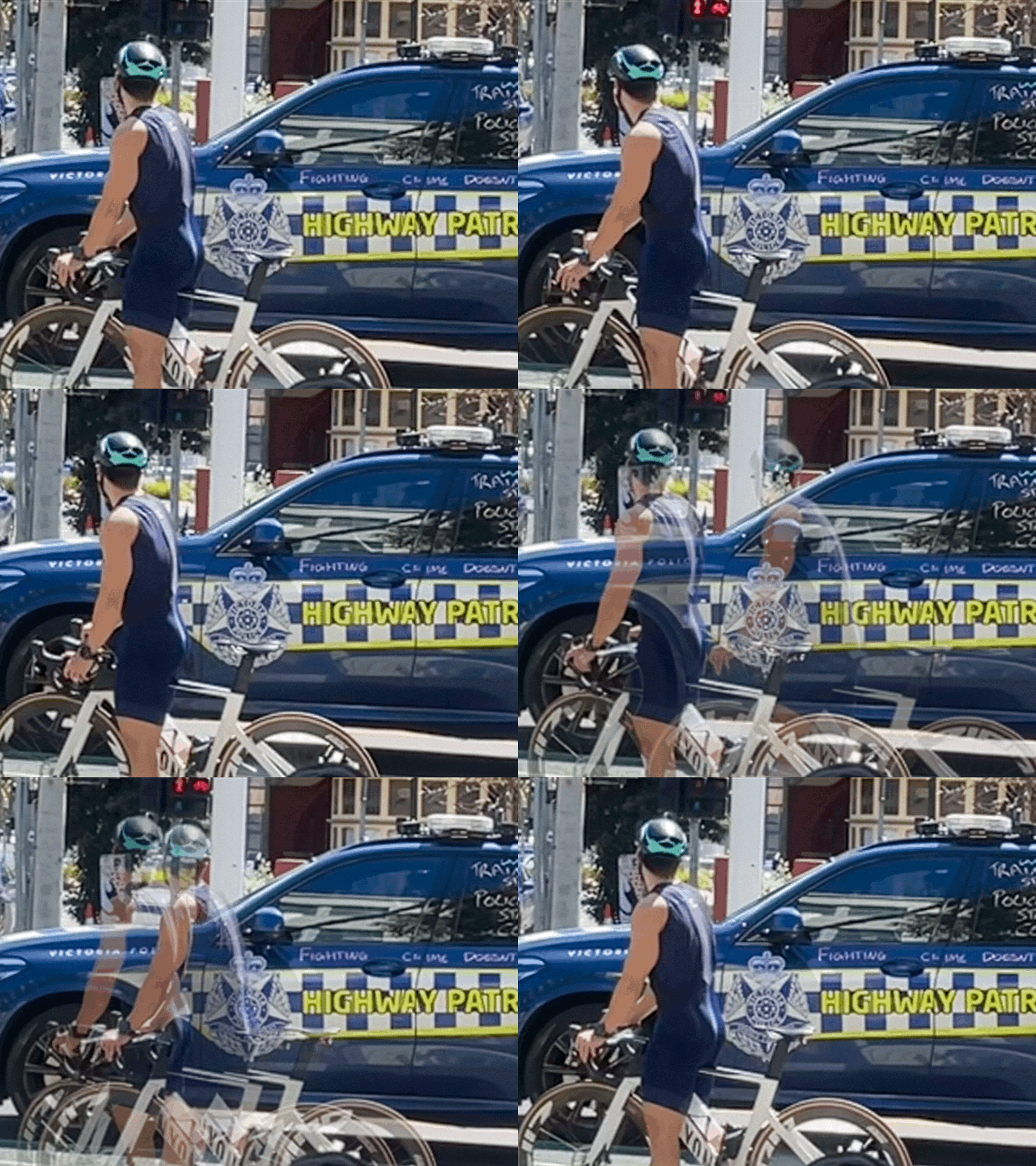
Property offences, like theft, have led to an increase in the overall rate of crime across Victoria, to its highest level since 2020.
Crime committed by children and family violence offending has also risen, according to the Crime Statistics Agency.
Victoria Police said the increase in recorded crime could be linked to cost-of-living pressures.
abc.net.au/news/crime-statistics-agency-victoria-police/104745758
Link copiedShare article
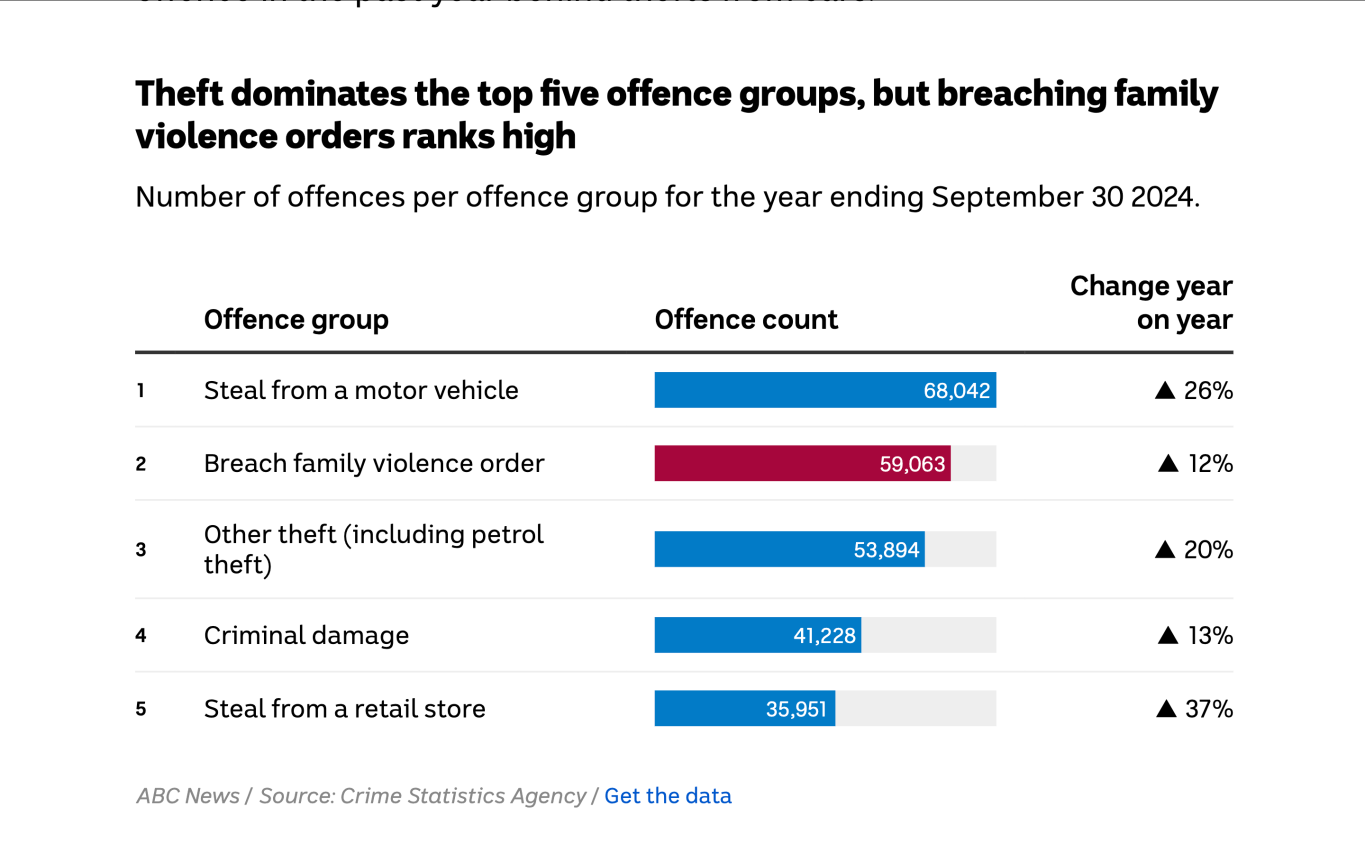
Victoria’s rate of recorded thefts has risen to its highest level in close to a decade, driven by car and shop thefts, police data shows.
Crime Statistics Data has shown these kinds of property offences have driven an increase in overall recorded crime across Victoria, which grew to its highest rate since 2020.
There were more than 200,000 thefts across Victoria in the year to September 30, although when compared with population, the rate was slightly lower than 2016.
According to Victoria Police Deputy Commissioner Neil Paterson, theft from motor vehicles reached record highs. More than a third of them related to number plates being stolen, followed by stolen power tools and cash.
He said a large majority of those thefts — 83 per cent — showed no signs of forced entry.
Theft from retail stores also recorded a significant increase, with police identifying meat, fresh produce, cosmetics and vitamins as among the most frequently stolen items.
Deputy Commissioner Paterson said the cost-of-living squeeze appeared to be the cause.
“We know that research shows that when there are higher cost-of-living pressures [and] higher interest rates, that is directly linked to crime rates,” he said.
“So hopefully we will see some cost of living relief in 2025 that should hopefully drive down some of this data as well.”
While a smaller proportion of the overall theft offences, the number of motor vehicles that were stolen also rose, reaching its highest level since 2003.
Data shows repeat youth offending pattern among small cohort
Deputy Commissioner Paterson said police intelligence showed 40 per cent were related to youth crime, where figures also increased substantially to the highest level in a decade.
However, these offenders only accounted for a tenth of the total number of offenders.
While there was a reduction in the number of individual children committing crime, Deputy Commissioner Paterson said there had been an increase in repeat offending for this age group.
He said this had been a focus of two speciality police operations, where nine offenders aged under 24 were being arrested each day.
“Our crime reduction teams … are playing a really important part of trying to hold offenders to account, not only by [revoking] their bail if they are further offending, but also by referrals into pathways,” he said. How tech-savvy crooks are stealing Victorian cars
Photo shows A man with short dark hair looks solemn as he stands outdoors.
Not only did thieves steal Drew Cameron’s vehicle twice in the space of a few nights, they also tracked his movements and knocked out his home security system.
The increase in figures comes amid pressure on the state government to do more to drive down youth crime, after three Victorians were allegedly killed in the past year in connection with youth crime.
In August, the government abandoned its promise to raise the criminal age of responsibility to 14.
It has also faced calls to commit more sustained funding for youth crime prevention programs.
Youth Support and Advocacy Service CEO Andrew Bruun said his service, which supported young people involved in crime across Victoria, was in dire need of more funding.
“We’re seeing a lot of young people that get involved in crime also living lives of pretty serious disadvantage,” he said.
“We’ve got to address the disadvantage, and that will help them unlock other pathways in their life and get involved back in school and work.”
Court order breaches dominate family violence statistics
The number of recorded family violence incidents also surpassed 100,000, which is the highest number Victoria has registered.
However, when compared to population, the rates of incidents are lower than what was recorded in 2016.
Family violence order breaches accounted for a significant proportion of this offending, and was recorded as the second most common offence in the past year behind thefts from cars.
Deputy Commissioner Paterson said the number of breaches was “disturbing”, and could also be linked to cost-of-living pressures.
“Some of the unavailability of housing also means people are staying under the same roof, and that’s a contributing factor,” he said.
He said family violence offending increased sharply in December, and encouraged the community to look out for family and friends.
“And over the coming weeks ahead, Victoria Police will be out knocking on the doors of family violence perpetrators, reminding of their them of their accountabilities at this time of year and try to keep victim survivors safe,” he said.
Latest crime data by area | Crime Statistics (access the live data through the link)
Data collection for statistical purposes is a good thing if used to provide an informed and unbiased analysis, not for inciting a moral panic for political gain or scapegoating.
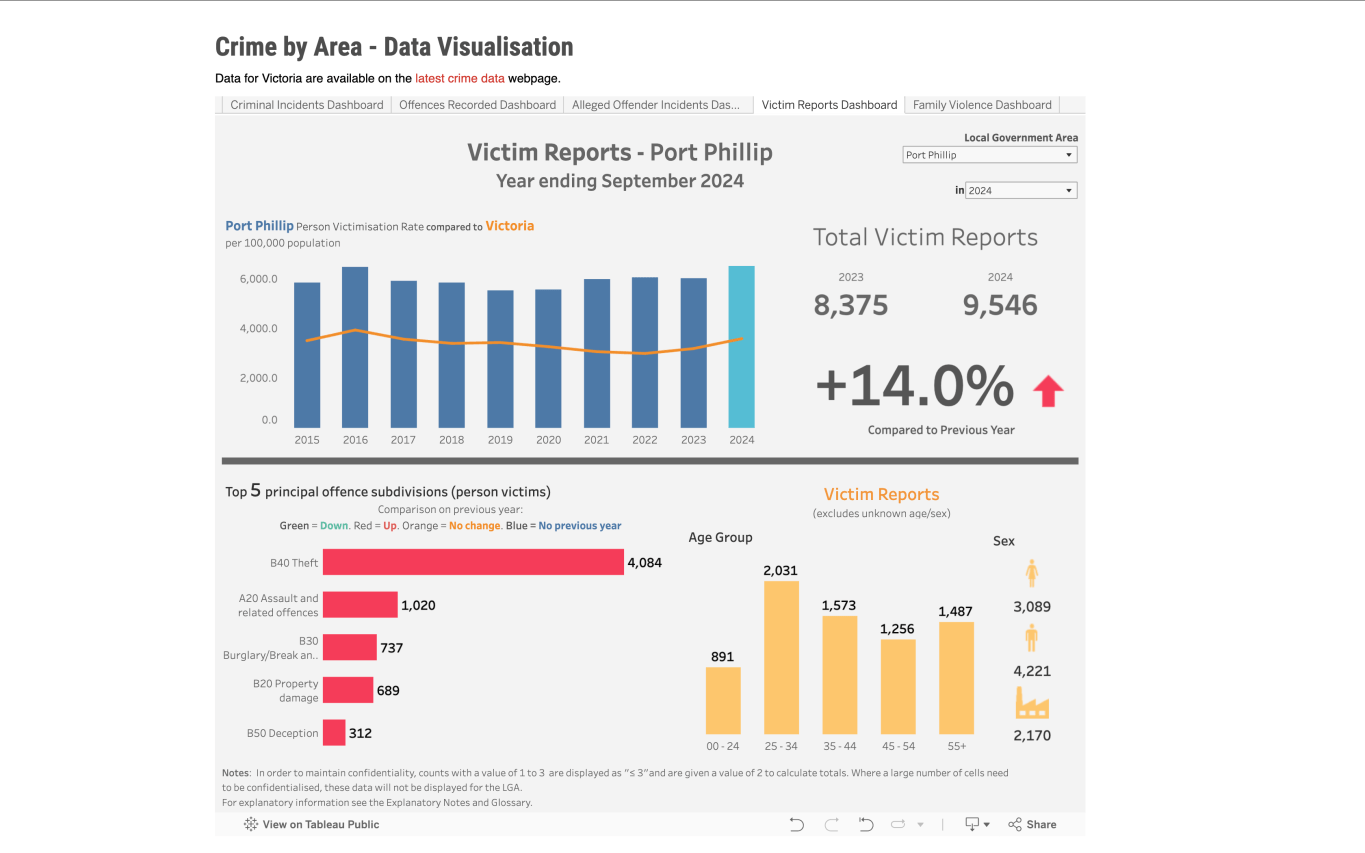
In the City of Port Phillip, 43% of total victim reports is due to Theft.
Why do people steal?
Why do people steal in one of Melbourne’s most affluent local government areas? Why is stealing from a motor vehicle so rampant?
What is the proportion of retail theft in our area? What is the proportion of theft in the major supermarket brands Coles and Woolworths as compared to other retail outlets?
Do people steal for food, fashion, fun or a fix? What items are being traded in at cash converters? This level of granularity would certainly be helpful to understand the drivers of theft–its root causes–in order to identify the most effective and cost-effective means to curb it.
How can theft be avoided? Neighbourhood Watch Victoria recommends we do our part:
Neighbourhood Policing focuses on the issues that matter most to local communities.
Community Sentiment Survey 2024
Our third annual Community Sentiment Survey closed on Friday 31 May.
Thank you to all who shared their top safety concerns with police. Your responses helped us identify the issues that matter most to Victorians.
View the results of Victoria Police Community Sentiment Survey 2024 on Engage Victoria.
Our commitment to community
Neighbourhood Policing ensures local community concerns are central to decision making and result in local police:
- being more visible and accessible to their local community
- actively listening to their community
- acting on community safety concerns
- working in partnership with others to address safety concerns
- communicating the outcomes and action taken.
Understanding local safety concerns
Listening to the community and understanding what safety issues people are concerned about is an important step in Neighbourhood Policing.
At a local level, police will be tasked with gathering, recording, and monitoring these issues and concerns.
We encourage you to share safety concerns with your local police through:
- everyday interactions such as at events
- talking to officers patrolling public areas
- visiting your local police station.
Working together to address safety concerns
As part of our commitment to Neighbourhood Policing, local police will compile a register of public safety issues that matter most to their local community.
Police will then be tasked to specifically address these issues or work with community safety partner organisations when issues are more complex.
We will do this by forming a Local Safety Committee in each Police Service Area together with community groups, government, and business stakeholders.
Each committee will develop a Local Safety Plan based on the concerns its community has raised and deliver prevention-focussed strategies to address your safety concerns through both policing and non-policing activity.
How you can receive updates
We want to show you we are listening to your safety concerns and taking action to address them.
Local police will provide updates about the various safety issues raised and Neighbourhood Policing activities undertaken through:
- local media
- Eyewatch pages on Facebook.
Each Police Service Area has an Eyewatch page on Facebook where you can:
- keep up to date with Neighbourhood Policing priorities and initiatives
- access local safety and crime prevention information.
“Law enforcement visibility can refer to the deliberate increase of police presence in a community, to reduce crime, improve public safety, and increase public confidence.
“Some say that increasing police visibility can increase the number of people caught for some types of crime, but it may not be a long-term or cost-effective crime reduction solution. Others say that the new high-visibility status of police work undermines public trust and challenges police legitimacy.”—Gen.AI+
“Law enforcement officers are responsible for protecting the public and preventing illegal acts, but they also have the authority to arrest people. Police can arrest someone if:
–The person is committing a traffic offense and refuses to give their name and address;
–They have a warrant for the person’s arrest;
–They reasonably suspect the person has committed an offense;
–They find the person committing an offense;
–The person has breached bail conditions; or
–The person is trying to escape from custody.”—Gen.AI+
Code of Conduct for Law Enforcement Officials | United Nations Human Rights (1979)
Article 1
Law enforcement officials shall at all times fulfil the duty imposed upon them by law, by serving the community and by protecting all persons against illegal acts, consistent with the high degree of responsibility required by their profession.
Commentary :
- The term “law enforcement officials”, includes all officers of the law, whether appointed or elected, who exercise police powers, especially the powers of arrest or detention.
- In countries where police powers are exercised by military authorities, whether uniformed or not, or by State security forces, the definition of law enforcement officials shall be regarded as including officers of such services.
- Service to the community is intended to include particularly the rendition of services of assistance to those members of the community who by reason of personal, economic, social or other emergencies are in need of immediate aid.
- This provision is intended to cover not only all violent, predatory and harmful acts, but extends to the full range of prohibitions under penal statutes. It extends to conduct by persons not capable of incurring criminal liability.
Article 2
In the performance of their duty, law enforcement officials shall respect and protect human dignity and maintain and uphold the human rights of all persons.
Commentary :
- The human rights in question are identified and protected by national and international law. Among the relevant international instruments are the Universal Declaration of Human Rights, the International Covenant on Civil and Political Rights, the Declaration on the Protection of All Persons from Being Subjected to Torture and Other Cruel, Inhuman or Degrading Treatment or Punishment, the United Nations Declaration on the Elimination of All Forms of Racial Discrimination, the International Convention on the Elimination of All Forms of Racial Discrimination, the International Convention on the Suppression and Punishment of the Crime of Apartheid , the Convention on the Prevention and Punishment of the Crime of Genocide, the Standard Minimum Rules for the Treatment of Prisoners and the Vienna Convention on Consular Relations.
- National commentaries to this provision should indicate regional or national provisions identifying and protecting these rights.
Article 3
Law enforcement officials may use force only when strictly necessary and to the extent required for the performance of their duty.
Commentary :
- This provision emphasizes that the use of force by law enforcement officials should be exceptional; while it implies that law enforcement officials may be authorized to use force as is reasonably necessary under the circumstances for the prevention of crime or in effecting or assisting in the lawful arrest of offenders or suspected offenders, no force going beyond that may be used.
- National law ordinarily restricts the use of force by law enforcement officials in accordance with a principle of proportionality. It is to be understood that such national principles of proportionality are to be respected in the interpretation of this provision. In no case should this provision be interpreted to authorize the use of force which is disproportionate to the legitimate objective to be achieved.
- The use of firearms is considered an extreme measure. Every effort should be made to exclude the use of firearms, especially against children. In general, firearms should not be used except when a suspected offender offers armed resistance or otherwise jeopardizes the lives of others and less extreme measures are not sufficient to restrain or apprehend the suspected offender. In every instance in which a firearm is discharged, a report should be made promptly to the competent authorities.
Article 4
Matters of a confidential nature in the possession of law enforcement officials shall be kept confidential, unless the performance of duty or the needs of justice strictly require otherwise.
Commentary :
By the nature of their duties, law enforcement officials obtain information which may relate to private lives or be potentially harmful to the interests, and especially the reputation, of others. Great care should be exercised in safeguarding and using such information, which should be disclosed only in the performance of duty or to serve the needs of justice. Any disclosure of such information for other purposes is wholly improper.
Article 5
No law enforcement official may inflict, instigate or tolerate any act of torture or other cruel, inhuman or degrading treatment or punishment, nor may any law enforcement official invoke superior orders or exceptional circumstances such as a state of war or a threat of war, a threat to national security, internal political instability or any other public emergency as a justification of torture or other cruel, inhuman or degrading treatment or punishment.
Commentary :
a.This prohibition derives from the Declaration on the Protection of All Persons from Being Subjected to Torture and Other Cruel, Inhuman or Degrading Treatment or Punishment, adopted by the General Assembly, according to which:
“[Such an act is] an offence to human dignity and shall be condemned as a denial of the purposes of the Charter of the United Nations and as a violation of the human rights and fundamental freedoms proclaimed in the Universal Declaration of Human Rights [and other international human rights instruments].”
b.The Declaration defines torture as follows:
“. . . torture means any act by which severe pain or suffering, whether physical or mental, is intentionally inflicted by or at the instigation of a public official on a person for such purposes as obtaining from him or a third person information or confession, punishing him for an act he has committed or is suspected of having committed, or intimidating him or other persons. It does not include pain or suffering arising only from, inherent in or incidental to, lawful sanctions to the extent consistent with the Standard Minimum Rules for the Treatment of Prisoners.”
c.The term “cruel, inhuman or degrading treatment or punishment” has not been defined by the General Assembly but should be interpreted so as to extend the widest possible protection against abuses, whether physical or mental.
Article 6
Law enforcement officials shall ensure the full protection of the health of persons in their custody and, in particular, shall take immediate action to secure medical attention whenever required.
Commentary :
- “Medical attention”, which refers to services rendered by any medical personnel, including certified medical practitioners and paramedics, shall be secured when needed or requested.
- While the medical personnel are likely to be attached to the law enforcement operation, law enforcement officials must take into account the judgement of such personnel when they recommend providing the person in custody with appropriate treatment through, or in consultation with, medical personnel from outside the law enforcement operation.
- It is understood that law enforcement officials shall also secure medical attention for victims of violations of law or of accidents occurring in the course of violations of law.
Article 7
Law enforcement officials shall not commit any act of corruption. They shall also rigorously oppose and combat all such acts.
Commentary :
- Any act of corruption, in the same way as any other abuse of authority, is incompatible with the profession of law enforcement officials. The law must be enforced fully with respect to any law enforcement official who commits an act of corruption, as Governments cannot expect to enforce the law among their citizens if they cannot, or will not, enforce the law against their own agents and within their agencies.
- While the definition of corruption must be subject to national law, it should be understood to encompass the commission or omission of an act in the performance of or in connection with one’s duties, in response to gifts, promises or incentives demanded or accepted, or the wrongful receipt of these once the act has been committed or omitted.
- The expression “act of corruption” referred to above should be understood to encompass attempted corruption.
Article 8
Law enforcement officials shall respect the law and the present Code. They shall also, to the best of their capability, prevent and rigorously oppose any violations of them.
Law enforcement officials who have reason to believe that a violation of the present Code has occurred or is about to occur shall report the matter to their superior authorities and, where necessary, to other appropriate authorities or organs vested with reviewing or remedial power.
Commentary :
- This Code shall be observed whenever it has been incorporated into national legislation or practice. If legislation or practice contains stricter provisions than those of the present Code, those stricter provisions shall be observed.
- The article seeks to preserve the balance between the need for internal discipline of the agency on which public safety is largely dependent, on the one hand, and the need for dealing with violations of basic human rights, on the other. Law enforcement officials shall report violations within the chain of command and take other lawful action outside the chain of command only when no other remedies are available or effective. It is understood that law enforcement officials shall not suffer administrative or other penalties because they have reported that a violation of this Code has occurred or is about to occur.
- The term “appropriate authorities or organs vested with reviewing or remedial power” refers to any authority or organ existing under national law, whether internal to the law enforcement agency or independent thereof, with statutory, customary or other power to review grievances and complaints arising out of violations within the purview of this Code.
- In some countries, the mass media may be regarded as performing complaint review functions similar to those described in subparagraph (c) above. Law enforcement officials may, therefore, be justified if, as a last resort and in accordance with the laws and customs of their own countries and with the provisions of article 4 of the present Code, they bring violations to the attention of public opinion through the mass media.
- Law enforcement officials who comply with the provisions of this Code deserve the respect, the full support and the co-operation of the community and of the law enforcement agency in which they serve, as well as the law enforcement profession.
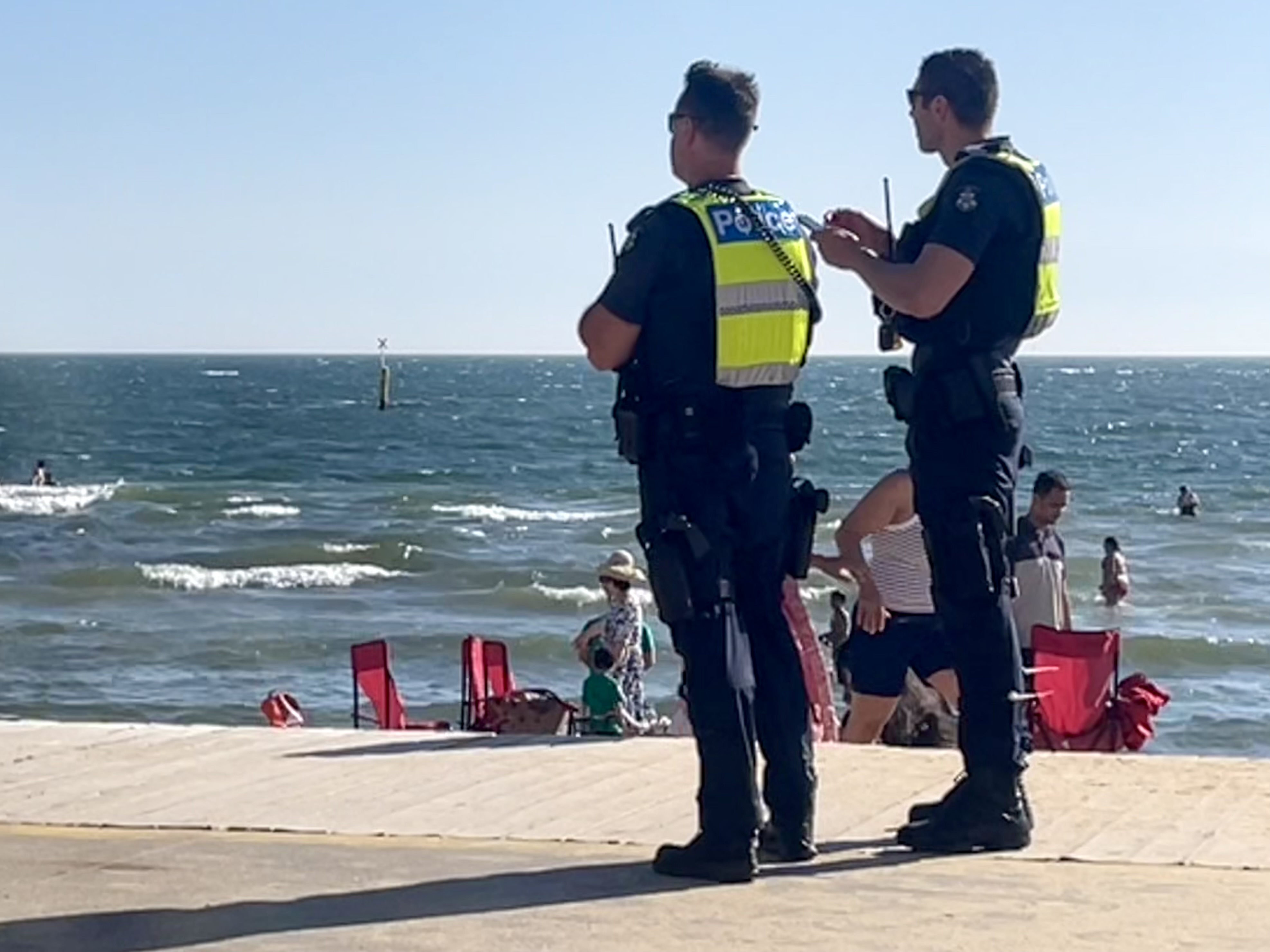
The Harms Of Criminalising Public Drunkenness | 360edge
“As is often the case with criminal laws that target alcohol and other drug use, these measures disproportionately impacted the most vulnerable in the community.
“Public drunkenness is a relatively common sight on any Friday and Saturday night, but it is commonly only viewed as a disturbance outside socially accepted times and places. This means public drunkenness laws are most often targeted towards alcohol dependent people, who may be drinking during the day or at socially inappropriate locations.
“Many people intercepted for public drunkenness have experiences of homelessness, mental health issues, disability, violence or trauma. For some people who are socially isolated, drinking in public gives a sense of social connection or can be seen as a tool to cope with challenging life circumstances.
“It is widely acknowledged that criminal laws against public drunkenness disproportionately impact Aboriginal and Torres Strait Islander people.”
Decriminalisation of public drunkenness in Victoria | Alcohol & Drug Foundation
In AOD work, we often speak of the harms associated with alcohol or other drugs in themselves, but equally important is recognising how laws can cause harm, particularly to vulnerable members of the community.
Victoria has recently begun the process of decriminalising public drunkenness, moving towards a health-based response. This was sparked by the death of 55-year-old Yorta Yorta woman Tanya Day, who died as a result of traumatic brain injuries whilst placed in a police cell to “sober up”.
Once laws are changed in Victoria, Queensland will be the only jurisdiction which still criminalises intoxication in public.
Making Things Worse
Laws prohibiting public drunkenness can be traced back to the English Parliament of 1606, when a law was passed criminalising and “oppressing the odious and loathsome sin of drunkenness”. The Victorian laws against public drunkenness have been unchanged since 1966.
The most common penalty for public drunkenness is a fine, however it is not uncommon for law enforcement to place people in police cells to “sober up” if they are acting disorderly.
It is widely acknowledged that criminalising the use or possession of alcohol and other drugs exacerbates their harms. In particular, punitive measures may increase stigma, deter people from seeking help or engaging with harm reduction services.
The use of police cells to detain intoxicate person has also been heavily criticised for being poorly equipped to monitor and address adverse health outcomes from intoxication.
Targeting the most marginalised.
As is often the case with criminal laws that target alcohol and other drug use, these measures disproportionately impacted the most vulnerable in the community.
Public drunkenness is a relatively common sight on any Friday and Saturday night, but it is commonly only viewed as a disturbance outside socially accepted times and places. This means public drunkenness laws are most often targeted towards people are alcohol dependent, who may be drinking during the day or at socially inappropriate locations.
Many people intercepted for public drunkenness have experiences of homelessness, mental health issues, disability, violence or trauma. For some people who are socially isolated, drinking in public gives a sense of social connection or can be seen as a tool to cope with challenging life circumstances.
It is widely acknowledged that criminal laws against public drunkenness disproportionately impact Aboriginal and Torres Strait Islander people.
Aboriginal and Torres Strait Islander peoples comprise more than a quarter (29.6%) of all people imprisoned for public order offences such as public drunkenness in Victoria, and 9% of all Victorians currently serving a sentence for such offences, despite being only 0.8% of the Victorian population.
Abolishing the offence of public drunkenness was one of the key recommendations to come from the Royal Commission into Aboriginal Deaths in Custody in 1991.
A Health Based Response
A set of recommendations have been developed by an Expert Reference Group on Decriminalising Public Drunkenness, to assist Victoria in providing a health-based response.
The Seeing The Clear Light of Day report recommends a series of steps be taken when encountering a person who is severely intoxicated in public, with the use of law enforcement only as a last reesort.
It recommends the first responders should be personnel from health or community services organisations, such as outreach services (including existing outreach programs associated with homelessness services), alcohol and other drugs (ADO) services and Aboriginal Community Controlled Organisations (ACCOs).
The role of police (if any) should be to facilitate the transportation of intoxicated persons to places of safety. This could be with trusted family or friends, or one of the recommended newly expanded sobering services in the state. If urgent medical care is required, people should be taken to emergency services.
It’s clear that the report recognises the failures of a criminal justice response to alcohol and other drug use, and its ongoing impact on the most vulnerable. At the end of its summary of recommendations, the author’s write:
“Once the shackles of a criminal justice approach to public intoxication have been shed, there can be no going back. The path ahead lies in a comprehensive health-led response that recognises public intoxication for what it is – a public health issue and not one that can be addressed by a blunt and reactive criminal justice approach.”
“Alcohol use is a public health issue, not a criminal justice issue.”
“It is no longer a criminal offence in Victoria to be intoxicated (affected by alcohol) in public. Police cannot arrest, detain or fine you for this offence. They still have powers to arrest and detain you for other public order offences.”
[Public order offences include disorderly conduct, unlawful assembly, homelessness, prostitution, and drug and alcohol offences.]
NOTE: Aboriginal and Torres Strait Islander readers are advised that the following article contains names and descriptions of people who have died.
From November 7, 2023, public intoxication (public drunkenness) will no longer be a criminal offense in Victoria, following the Government’s 2019 announcement that the law would be removed.1-3
Public intoxication is when someone is drunk in a public place. Decriminalising this means people will no longer face the possibility of being arrested for being drunk in public.
Victoria is the second last Australian jurisdiction to decriminalise public intoxication.
Queensland is currently completing an inquiry into introducing it and the other states and territories decriminalised the offense between 1974 and 1990.
The decision in Victoria came after the tragic death of Aboriginal woman, Tanya Day, in police custody after being arrested while intoxicated.4
Tanya was asleep on a train from Melbourne to regional Victoria when she was arrested in December 2017.
While in police custody, she fell and hit her head, resulting in a brain injury. Less than three weeks later, she died at St. Vincent’s hospital in Melbourne.
The law change in Victoria is welcome news for groups that have been the most impacted by public intoxication laws, including:
- Aboriginal and Torres Strait Islander communities
- people experiencing homelessness
- multicultural communities.5
How do Victoria’s public intoxication laws work?
Up until the new laws come into effect on November 7, 2023, the laws in Victoria mean police can arrest people they suspect are drunk in a public place, with a penalty of roughly $1160.6
If someone is also charged with being disorderly, they can be banned from a licenced venue, receive a fine of up to $900, or be sentenced to a month in prison with a criminal record.
Many people charged with public intoxication are taken into police custody to sober up, rather than their home or another place of safety.
There have been a significant number of deaths in police cells in many western countries where people are detained for public intoxication.7
Impact on Aboriginal and Torres Strait Islander peoples
First Nation’s communities have been advocating for the decriminalisation of public drunkeness for decades.3
Since 1979/80, Aboriginal and Torres Strait Islander people have accounted for 19% of all deaths in custody and 22% of deaths in police custody – despite only making up 3.2% of the population.8,9
The 1991 Royal Commission into Indigenous Deaths in Custody found that Aboriginal and Torres Strait Islander people were far more likely to be arrested and imprisoned for public intoxication compared to the rest of the population, and that laws should be immediately removed due to the disproportionate and harmful impact they have. This still remains true today.10
In 2019, Aboriginal and Torres Strait Islander people were over nine times more likely to serve a sentence for a public order offense such as public intoxication in Victoria – despite making up only 0.8% of the Victorian population.11,12
Alcohol use is a public health issue, not a criminal justice issue
A health-based response to public intoxication can help reduce harm.
This type of approach focuses on finding the person a ‘place of safety’ where they can sober up and receive care or support.
For example, assisting an intoxicated person to return to their home, or to a friend or family member’s place while they sober up. This can also help minimise the impact on health services.5
But this option may not always be available.
Some people might be too intoxicated to be taken home, or they may be experiencing homelessness and have other complex needs. In these situations, it’s important to have accessible health services where people can sober up and receive appropriate care.
Sobering-up centres can meet this need.5
What is a sobering-up centre?
Sobering-up centres are safe places where people who are intoxicated can go to recover.
These centres can provide beds, food, water, a shower, clean clothes and even a laundry service. The average stay is around 24 hours but can be longer if needed.
It’s a much safer alternative to being in a police cell if someone is unwell or injured as there are health professionals on hand who can provide care.13
The health workers at a sobering-up centre usually include:
- alcohol and other drug workers
- case workers
- Aboriginal health workers
- nurses
- counsellors.
The workers can assess and monitor a person’s level of intoxication while they are at the centre, and get medical help if needed.13
They also offer brief counselling for the person’s alcohol use or other needs, once they are feeling better. This might include harm-reduction information to avoid risky situations next time they drink, or providing referrals to ongoing treatment and support.7,13
Some of the current sobering-up centres in Australia include:
- Sobering Up Unit | The Salvation Army Australia
- Murri Watch | Page – Diversion From Custody
- Sobering-Up Shelter – Katherine | ShelterMe | A directory for homeless Territorians
Victoria is set to open its first sobering-up centre following the law change coming into effect, with Cohealth in Collingwood being chosen as the provider: https://www.cohealth.org.au/sobering-service/
What can Victoria learn from the rest of Australia?
Public intoxication has been decriminalised for decades in other states and territories.
But, in many cases, police still charge people who are drunk in public with another related offence instead, such as having an open container of alcohol, disorderly conduct or using offensive language.5
In South Australia, police can apprehend an intoxicated person if they can’t look after themselves and either take them home, to an approved place, sobering-up centre, or police station. Due to the lack of sobering-up centres, police usually take someone to sober up in a police cell.7
Between 2014-19, there were 11,655 people taken into police cells for public intoxication in states/territories where it was decriminalised. The true number, however, is likely to be higher as WA has no available data.5
Poor implementation of decriminalisation of public drunkenness has meant many deaths in custody are still happening where the person has been detained for a minor offense.
From 1989-2021, there have been 129 deaths in police custody where the person was arrested for things like public drunkenness, protective custody for intoxication, disorderly conduct, or offensive behaviour.8
For decriminalisation to be effective, we need to ensure:
- first responders are health or community service organisations, supported by dedicated outreach services. For example: Outreach Services – Larrakia Nation
- there are enough sobering up centres, with a wide range of transport options available to take people to these centres
- services are culturally safe and able to offer the person short-term care and options for long-term support if the person needs and wants it
- police powers are restricted so that an intoxicated person can only be arrested by police if they’re a serious threat to harming themselves or others.5,7
The decriminalisation of public intoxication needs to be supported with a strong investment in health and welfare services so that the changes are effective.
More information
- Public intoxication reform | health.vic.gov.au
- What happens in a ‘sobering up’ centre? (theconversation.com)
- Seeing the Clear Light of Day: Expert Reference Group on Decriminalising Public Drunkenness

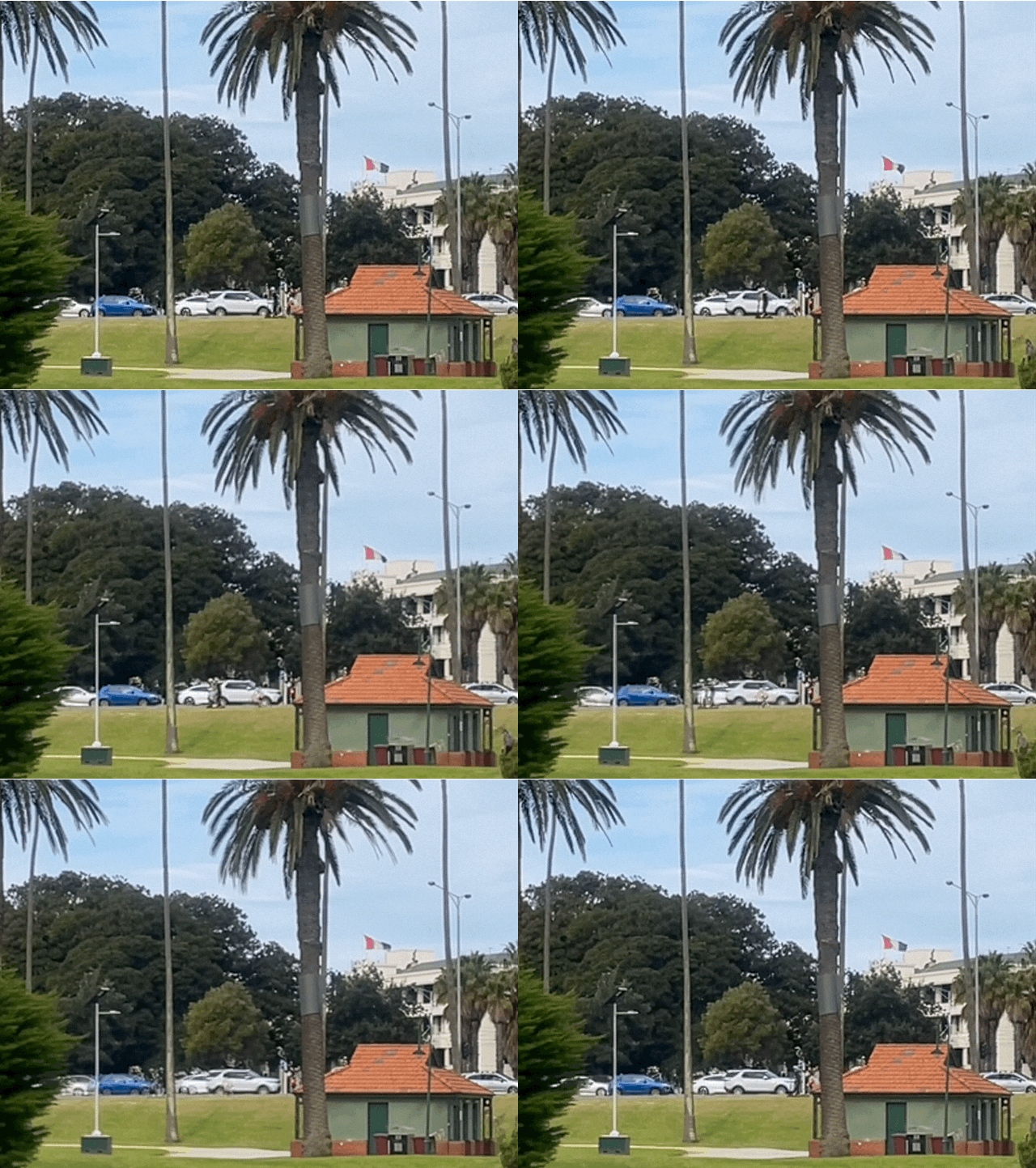

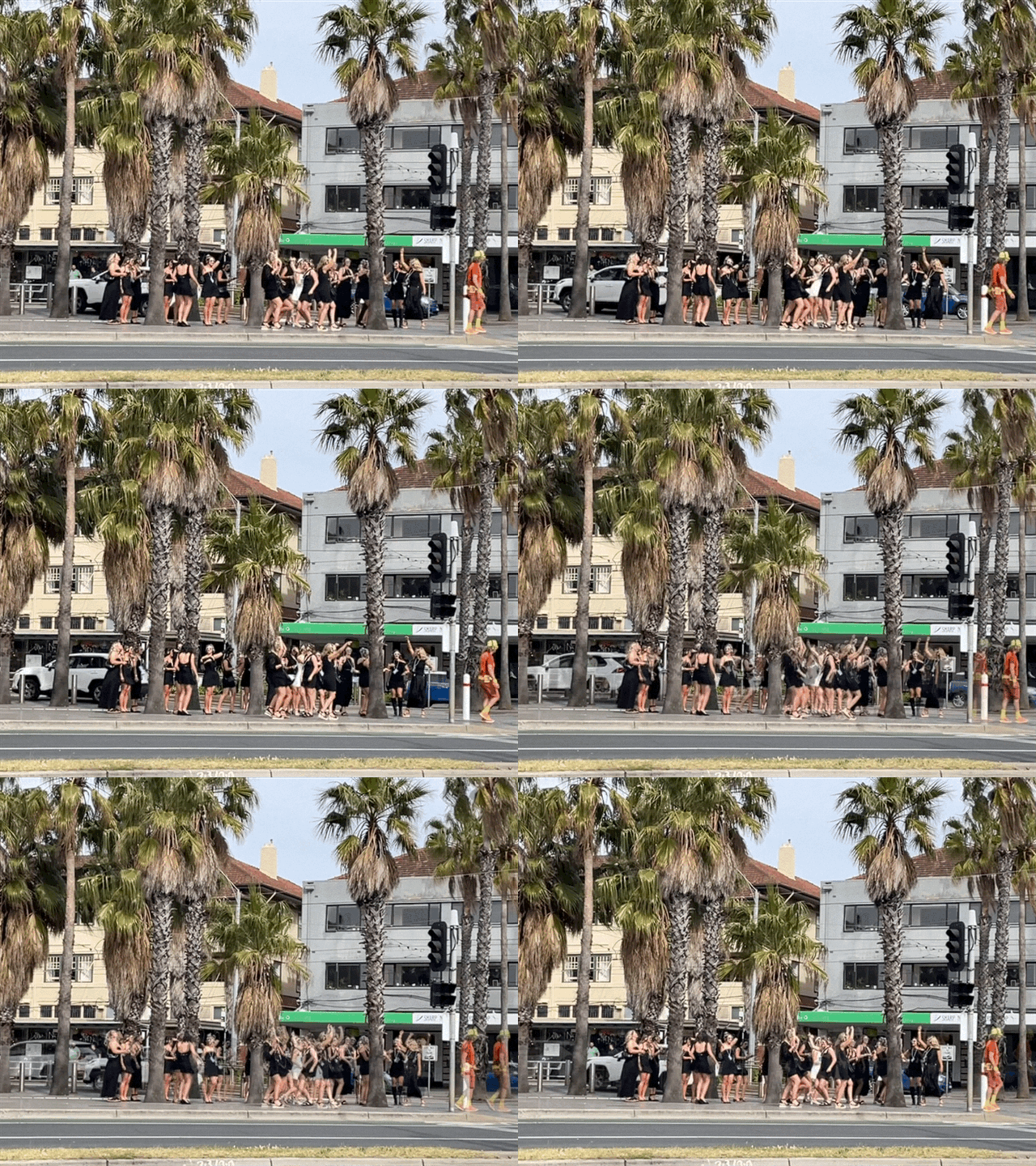
Why Do People Commit Crimes? (Nine Reasons) | Alliant International University
Psychological Factors Behind Criminal Behavior
1. Socioeconomic Disparities
2. Family Dynamics
3. Peer Influence
4. Substance Abuse
Environmental Triggers of Criminal Behavior
5. Urban Settings
6. Lack of Access to Education and Criminal Engagement
7. Unemployment
Psychological Drivers of Criminal Acts
8. Mental Health Disorders
9. Impulse Control
Psychological Factors Behind Criminal Behavior
First, let’s delve into four common psychosocial motivators for criminal behavior: cultural and social elements that intersect to inform thoughts and actions.1
1. Socioeconomic Disparities and Crime
Substantial data correlates low socioeconomic standing—low income, poor financial literacy, or poverty—with a high likelihood of incarceration. One recent study from the Brookings Institution, for example, discovered that those born between 1980 and 1986 and came from families who face socioeconomic challenges were more likely to be pushed to commit crime.2 Further:3
- Those who face these socioeconomic implications were 20 times more likely to be pushed to commit crime than those of the same age from high-earning families.
- These individuals only found employment after release from prison in 55% of cases—and post-release unemployment has been shown to be more likely to push convicted criminals to commit crime again.
While poverty itself is typically not the root cause of crime, it can lead to other psychosocial, environmental, or psychological conditions that may correlate with the likelihood of committing a crime, such as:
- Substance abuse – Substance dependence and abuse can be correlated with income; opioid overdoses, for instance, have been shown to be concentrated in lower-income neighborhoods.4
- Education access – Children from lower-income families may be less likely to graduate high school, attend college, or excel in math or reading.5
- Mental health challenges – People without access to quality mental health treatment make up a significant portion of incarcerated populations.6
2. Family Dynamics and Criminality
Family stability can also impact the likelihood of committing a crime. Current studies posit that family dynamics can impact incarceration potential in two key ways:7
- Family dynamics in childhood – Decades of data support the correlation between a young adult’s family instability and juvenile delinquency. In other words, those who experience a turbulent and unstable home life are statistically more likely to commit crimes during their youth.
- Family formation in adulthood – More recent data suggests that young adults with troubled family histories are more likely to experience disruptions to their own family formation processes (e.g., getting married and having children). And, those who experience their own family turmoil in adulthood are more likely to be pushed to commit crime.
3. Peer Influence and Criminal Act
Several studies connect peer influence and social networks with the likelihood of committing a crime:8
- Children with more “delinquents” (children tried or incarcerated for illegal activity) in their peer groups have a higher likelihood of committing crimes themselves.
- There is a wide body of data connecting peer and individual crime among adults. In other words, people with friends who commit criminal activity are more likely to do the same.
While boiling crime motivation down to “peer pressure” is an oversimplification, forensic behavioral psychologists have long recognized group behavior as a potential impetus for crime.
4. Substance Abuse and Criminal Offenses
While we touched on substance abuse earlier, let’s zoom in on additional data. In 2020, the National Institute on Drug Abuse compiled data from a variety of sources to determine that:9
- An estimated 65% of incarcerated people in the US suffer from a substance use disorder
- Another 20% of incarcerated people were under the influence at the time of their crime
But, like all of the other corollaries on this list, substance abuse doesn’t exist in a vacuum, and it’s important to understand the context of substance dependence in a greater social context. The following social groups are all at an increased risk for substance use disorder:
- Displaced or unhoused people10
- Veterans (especially those who have experienced being unhoused)11
- People who did not complete high school12
This is just one example of how criminal motivation can be multifaceted and highly dependent upon social context.
Environmental Triggers of Criminal Behavior
While psychosocial context can play a key role in crime, so can environmental elements like setting, education access, and unemployment. Let’s dive into each of these to explore their correlations to criminality.
5. Urban Settings and Crime Rates
In 1825, two French criminologists published a seminal work in what would become the field of forensics: a study that compared crime rates per capita (i.e., how many crimes were committed per person living in a geographic area) and posited that crime rate increased linearly with population size.13
However, newer approaches have revealed that per capita analyses of crime are misleading. They impose a linear relationship between crime and population when this isn’t always the case, skewing both public and expert perceptions of the urban crime rate.
While some crimes are linearly associated with population size, new approaches have determined that:
- The quantitative relationship between crime and population can vary on a city-by-city basis.
- Some types of crimes, like burglary, are linearly associated with population size, while others, like theft, are not.
6. Lack of Access to Education and Criminal Engagement
Numerous studies have observed connections between access to quality education and criminality. Here’s a snapshot of just a few conclusions from recent studies:
- Children who participate in early childhood education programs are less likely to commit crimes than children without access.14
- Investments in public schools drastically reduce crime rates. Children who attend well-funded schools are less likely to commit crimes in adulthood.15
- High school dropouts are five times more likely to be arrested during their lifetimes than their peers who graduated.16
But educational access is about so much more than the availability of public education. The American Psychological Association has compiled a wealth of sources supporting connections between income and education. Lower-income students generally have reduced access to resources and typically advance more slowly than their wealthier peers.17
7. Unemployment and Criminal Choices
Unemployment generally correlates to a higher likelihood of committing a crime.18 But like education access, unemployment is a nuanced issue.
For instance, one of the most recent studies of unemployment and criminality found a correlation between unemployment and two distinct types of crime:19
- Firearm violence
- Homicide
That said, this study was conducted during the COVID-19 pandemic when unemployment rates averaged eight points above predicted levels across American cities. In addition, firearm deaths continue to rise each year in the US. So, the correlation between unemployment and gun violence might not imply direct causation.
This is just one example that showcases the nuance and interdisciplinary nature of forensic psychology. Crime experts must assess how multiple elements interact to form conclusions about how psychosocial, environmental, and psychological factors (among others) impact crime.
Psychological Drivers of Criminal Acts
Finally, let’s dive into psychological factors that can influence criminal motivation—the subject of extensive research in the forensic behavioral science field.
8. Mental Health Disorders and Criminal Behavior
Mental health disorders and criminal behavior have a highly complex relationship that’s informed by a wide variety of social factors.
But, there’s an overwhelming correlation between mental health struggles and incarceration. While 21% of adults in the US reported experiencing symptoms of a mental illness in 2020, these symptoms were reported among:20
- 64% of people incarcerated in county jails
- 54% of people detained in state prisons
- 45% of people held in federal penitentiaries
Experts correlate this connection to numerous potential factors, like:
- Income – Lower-income people have reduced access to quality mental health care and a higher likelihood of experiencing symptoms of mental health disorders.21 They’re also statistically more likely to be incarcerated.22
- Mental health illiteracy in the criminal justice system – There have been notable, recent efforts to incorporate mental health literacy into law enforcement training programs, but studies show that these programs have produced mixed results.23
- Substance use disorders – Mental health disorders and substance use disorders are strongly correlated by extensive data—and people with substance use disorders are likely to be incarcerated at a higher rate than their counterparts. 24,25
9. Impulse Control and Criminal Impulsivity
The concept of impulse control has been widely studied across disciplines, including forensic psychology.
But much of what criminologists know about self-control and crime is framed by a seminal 1990s model that places impulse control at the forefront of criminal motivation.26 Today’s forensic psychologists are challenging this model; they’re digging deeper to unpack physiological, psychological, and psychosocial elements that inform impulse control to contextualize prevailing theories.
Behavioral forensics is still growing, and today’s prospective forensic psychology graduates have a unique opportunity to contribute new knowledge to a developing field.
School of Forensic Psychology at Alliant: Shaping Future Experts
Why do people commit crimes? It’s nearly impossible to point to just one cause. With so many factors at play, criminal motivation remains a nuanced and intriguing concept in behavioral forensics, criminology, and other social science fields.
If you’re interested in learning more about criminal motivations, consider pursuing a forensic psychology degree online. The forensic psychology program at Alliant International University offers career preparation, support from industry-leading faculty, and the flexibility of online learning.
Explore our forensic degree programs, apply today, and start pursuing your passion.
Sources:

Types and causes of crime in urban areas:
1. Crime against property, such as theft, arson, vandalism, smuggling, or fraud
2. Crime against the person, such as murder, manslaughter, assault, or battery
3. Crimes against authority, such as rioting, sabotage, or treason
Crime in urban areas can be caused by a number of factors, including economic inequality, social factors, and population density.
Economic inequality
1. Economic disparities are more pronounced in urban areas.
2. Low socioeconomic standing, such as low income or poverty, is linked to a higher likelihood of incarceration.
Social factors
3. Anonymity in cities can reduce social control and increase the likelihood of deviant behaviour.
4. Rural areas have stronger social bonds and informal social control mechanisms.
Population density
5. More people in a given area increases the likelihood of criminal activity.
6. In densely populated areas, there are more opportunities for criminal encounters.
Other factors
7. Unemployment is sometimes associated with crime, but the relationship is not always clear.
8. Limited law enforcement resources in rural areas may affect crime reporting and response times.
Does Increased Surveillance in Urban Areas Deter Crime Effectively? | Sam Wilks (June 2024)
“While increased surveillance in urban areas can contribute to the deterrence of crime, it is not a panacea. Its success depends heavily on the context in which it is used and the manner of its implementation. A holistic approach, which addresses the underlying social and economic causes of crime and involves community participation, is crucial. Only then can surveillance be a useful tool in the broader repertoire of urban crime prevention strategies. Thus, as cities continue to grow and evolve, so too must our strategies for maintaining law and order, always mindful of the fine balance between securing our streets and safeguarding our freedoms.”—Sam Wilks
In the discourse on urban crime and public safety, one of the most contentious debates centres around the effectiveness of increased surveillance. As cities across the globe, and notably, various metropolitan regions in Australia, invest in more sophisticated surveillance technologies, a fundamental question arises: does this proliferation of eyes in the sky and on the streets genuinely deter criminal activities, or does it merely shift the landscape of law enforcement without a proportional benefit in public safety?
The proliferation of surveillance technologies in urban areas is a response to a palpable need: the protection of citizens and the deterrence of crime. Cameras now pepper the landscapes of cities like Sydney, Darwin, and Melbourne, where they monitor everything from traffic violations to acts of violence. Proponents argue that such tools extend the reach of law enforcement, enhancing their ability to respond swiftly and effectively to incidents as they occur. Moreover, the psychological presence of surveillance, the so-called “Panopticon effect,” ostensibly acts as a deterrent against criminal behaviour, with the logic being that the fear of being watched and consequently caught reduces the likelihood of lawbreaking.
Yet, a lack of comprehension of modern psychology coupled with the proliferation of social media has resulted in offenders achieving notoriety by having their images widely circulated, effectively granting them a perverse form of celebrity. This notoriety often fulfills an emotional craving for significance, paradoxically encouraging further criminal acts under the relentless gaze of the public and surveillance cameras.
The narrative that surveillance alone can dramatically reduce crime rates is overly simplistic. Surveillance does not operate in a vacuum but interacts with various societal factors, including economic conditions, community relations, and the efficacy of the justice system itself. Critics argue that the reliance on surveillance can lead to a type of ‘security theatre’, a visible but ultimately superficial measure that does little to address the root causes of criminal behaviour, such as poverty, lack of education, and social disenfranchisement.
Moreover, the effectiveness of surveillance can be significantly influenced by how it is implemented. For instance, in high-crime areas, the mere presence of cameras doesn’t deter hardened criminals as much as it reassures law-abiding citizens. Here, the distinction between feeling safe and being safe becomes crucial. If the surveillance systems are not backed by adequate police presence and rapid response capabilities, their efficacy in preventing crime can be severely compromised. The average response time in the Northern Territory is over an hour, a substantially long time after a crime has been committed.
The ethical dimensions of surveillance cannot be overlooked either. The encroachment on privacy that such technologies entail raises significant concerns. The balance between security and liberty is delicate and fraught with complex trade-offs. Excessive surveillance erodes public trust in the state, leading to a paradoxical increase in societal paranoia and mutual suspicion.
Despite these concerns, empirical evidence does suggest that, in specific contexts, surveillance may effectively deter crime. For instance, a study in the city of Brisbane found a correlation between increased surveillance in public transport areas and a reduction in petty crimes such as vandalism and theft. Similarly, in Sydney, the introduction of more rigorous surveillance in nightlife districts correlated with a decline in public order offences. However, similar studies carried out after 2015 have had starkly different results.
It is critical to contextualise these successes within broader crime prevention strategies. Effective surveillance is typically part of a larger, integrated approach that includes community engagement, social services, and proactive law enforcement policies. For example, the use of CCTV in Perth’s public spaces has been most effective when combined with community policing initiatives that emphasise building trust and cooperation between the police and the local communities.
While increased surveillance in urban areas can contribute to the deterrence of crime, it is not a panacea. Its success depends heavily on the context in which it is used and the manner of its implementation. A holistic approach, which addresses the underlying social and economic causes of crime and involves community participation, is crucial. Only then can surveillance be a useful tool in the broader repertoire of urban crime prevention strategies. Thus, as cities continue to grow and evolve, so too must our strategies for maintaining law and order, always mindful of the fine balance between securing our streets and safeguarding our freedoms.
From the author.
The opinions and statements are those of Sam Wilks and do not necessarily represent whom Sam Consults or contracts to. Sam Wilks is a skilled and experienced Security Consultant with almost 3 decades of expertise in the fields of Real estate, Security, and the hospitality/gaming industry. His knowledge and practical experience have made him a valuable asset to many organizations looking to enhance their security measures and provide a safe and secure environment for their clients and staff.

While an increased police presence and surveillance can contribute to crime prevention, the root causes of crime—such as socio-economic factors, education, and mental health—often lie beyond law enforcement’s direct control. The idea that harsher policing automatically reduces crime is indeed contested, and Victoria Police’s softer approach at public events seems to have fostered a more cooperative relationship with the community.
While a softer policing strategy helps build public trust and improve community relations, it may not always be effective in dealing with more serious or violent crimes. Certain situations may require a firmer response to maintain order and safety. Additionally, relying too much on public goodwill without addressing systemic issues—such as repeat offending, organised crime, or the limitations of surveillance—could undermine long-term crime prevention efforts.
A targeted approach in policing, combining community engagement with strategic enforcement, can help maintain public trust while ensuring effective crime prevention. This could mean a visible but approachable police presence at public events while deploying more assertive tactics when dealing with serious crime, gangs, or repeat offenders.—Gen.AI+
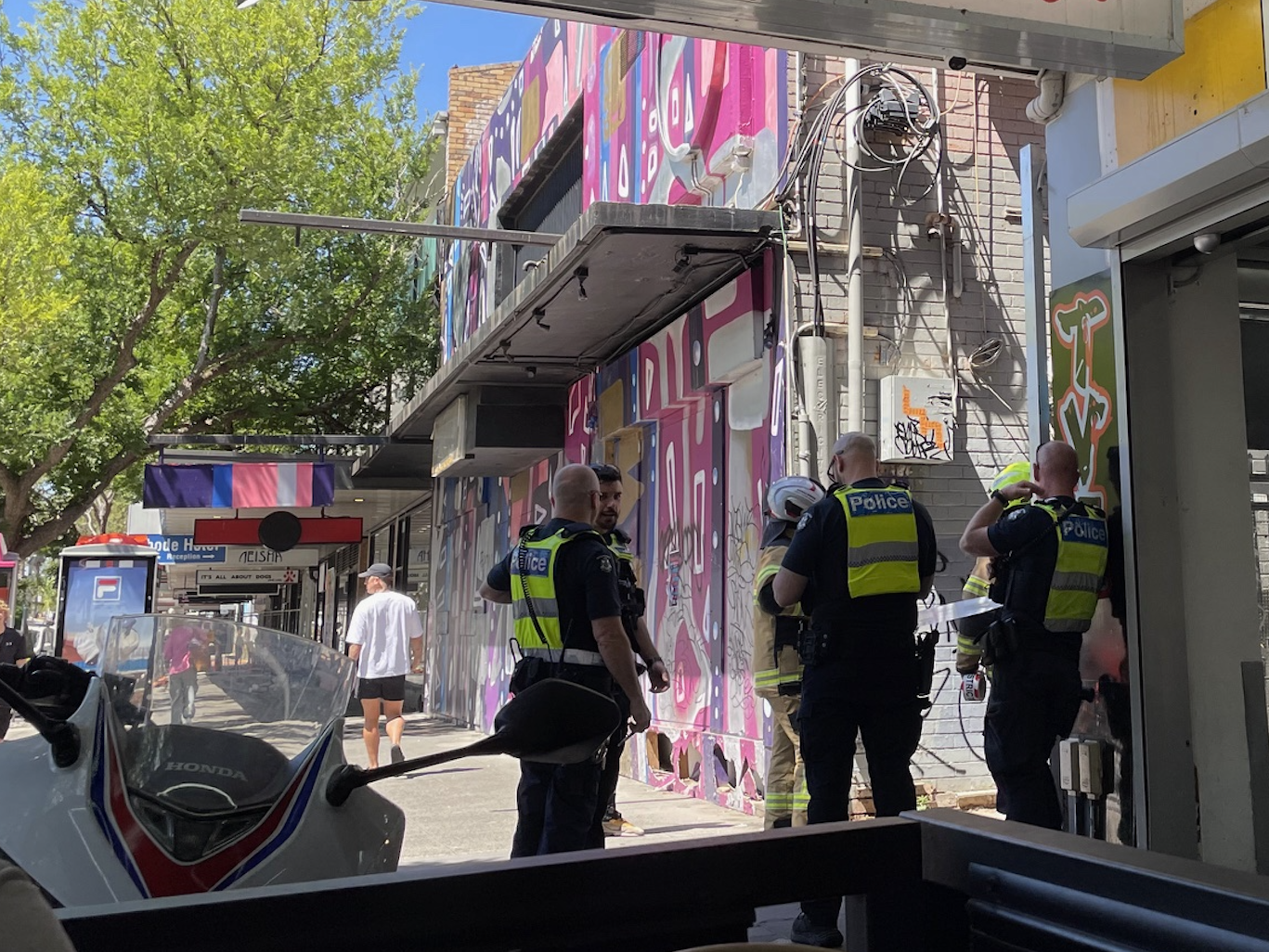
Is our local area unsafe?
Addressing the widespread public perception that “crime is rampant in our neighbourhoods” and that “more policing means less crime, safer communities and greater feelings of safety” requires a mix of education, transparency, and evidence-based policy discussions.
Some key approaches:
1. Public Education on Crime Prevention
Inform the public that while police presence can deter certain crimes, addressing root causes (poverty, mental health, substance abuse) is equally, if not more, important for long-term safety. Public campaigns and community forums can help shift the focus from just enforcement to prevention.
2. Data-Driven Crime Reporting
Share crime statistics and research showing the complexities of crime reduction. Highlight studies demonstrating that social programs, improved urban planning, and community policing can be just as effective as increased police numbers.
3. Community Engagement and Transparency
Encourage dialogue between police and communities to clarify what actually improves safety. When people see that proactive engagement, mental health interventions, and rehabilitation programs reduce crime, they may rethink the assumption that more officers automatically mean safer streets.
4. Balanced Policing Approach
Showcase successful models where a mix of community-based policing and strategic enforcement has improved safety, rather than simply adding more officers. This can include examples from both local and international contexts.
5. Media and Political Discourse
Challenge simplistic narratives in media and politics that equate more police with less crime. Encourage leaders and journalists to focus on nuanced discussions about crime trends, policing strategies, and social interventions.
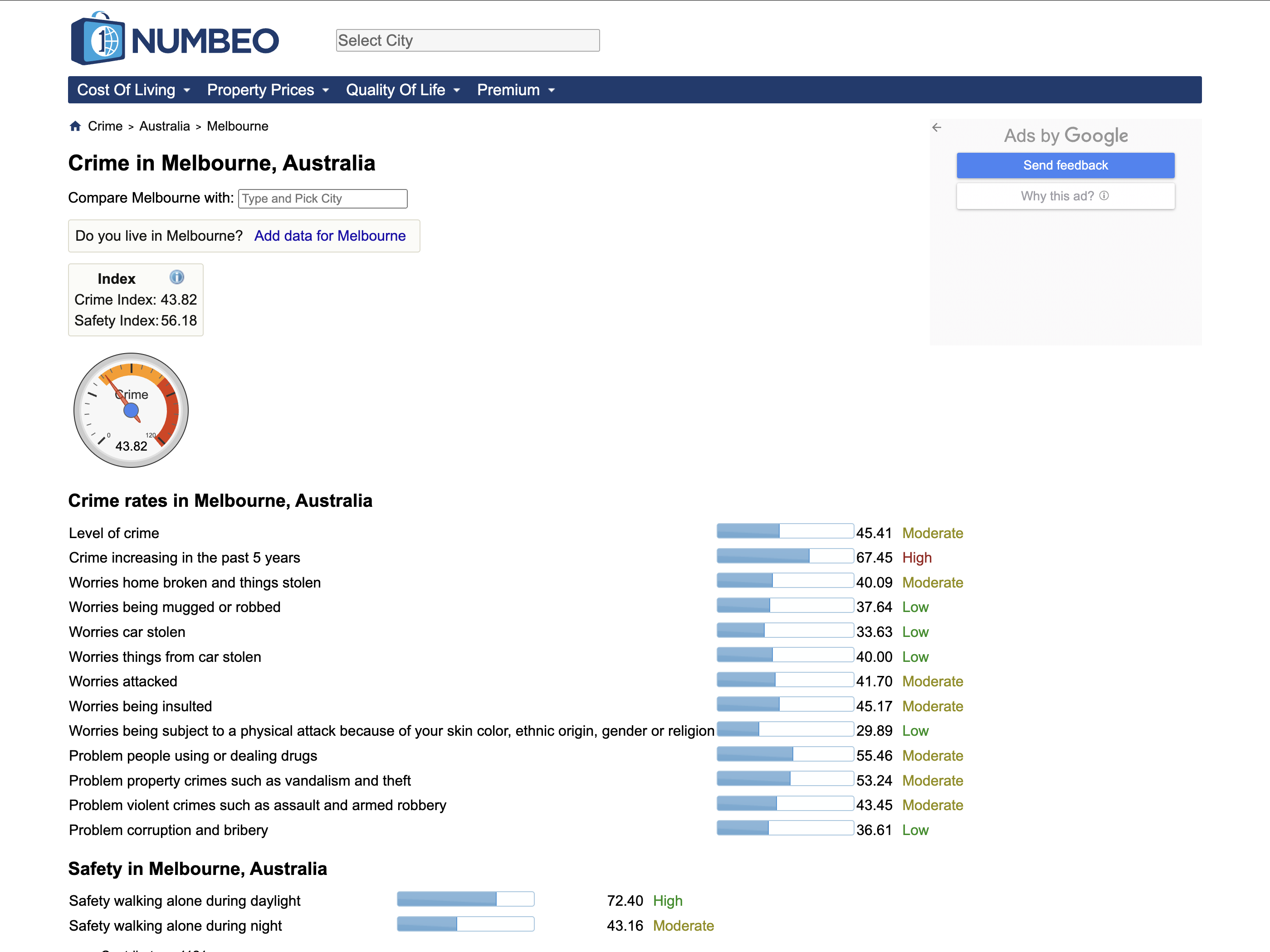
Crime Rate in Melbourne, Australia | Numbeo
In 2024, Melbourne was not listed among the most dangerous cities in the world. The list contained 333 entries.